

Hello everyone! This is Jenna, and I am excited to be joining the Rock Springs Chinatown archaeology research team this summer. Last week, we finished cataloging ceramic and glass artifacts from the 1991 excavation of the Rock Springs Chinatown, so we can soon begin a minimum number of vessels (MNV) analysis. For my first blog post, I’ll be sharing some information on two Chinese medicine vials that caught my attention while sorting through the glass artifacts.
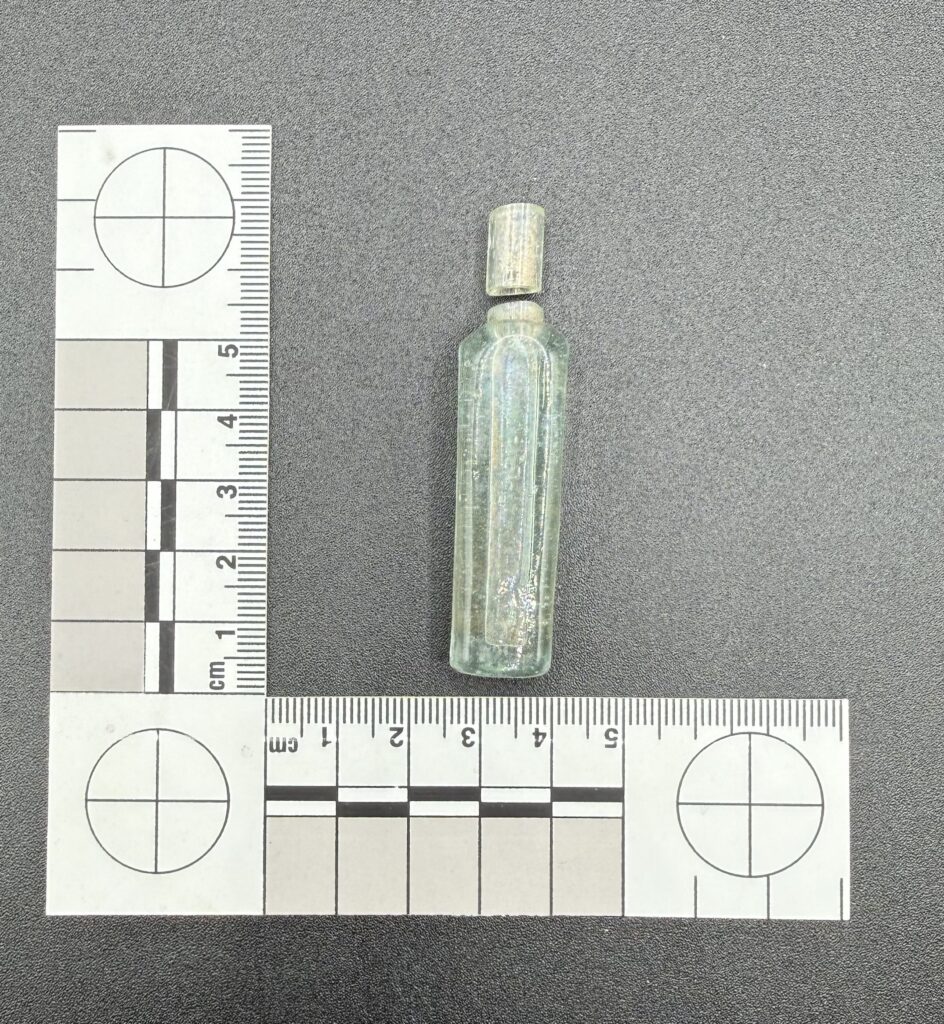
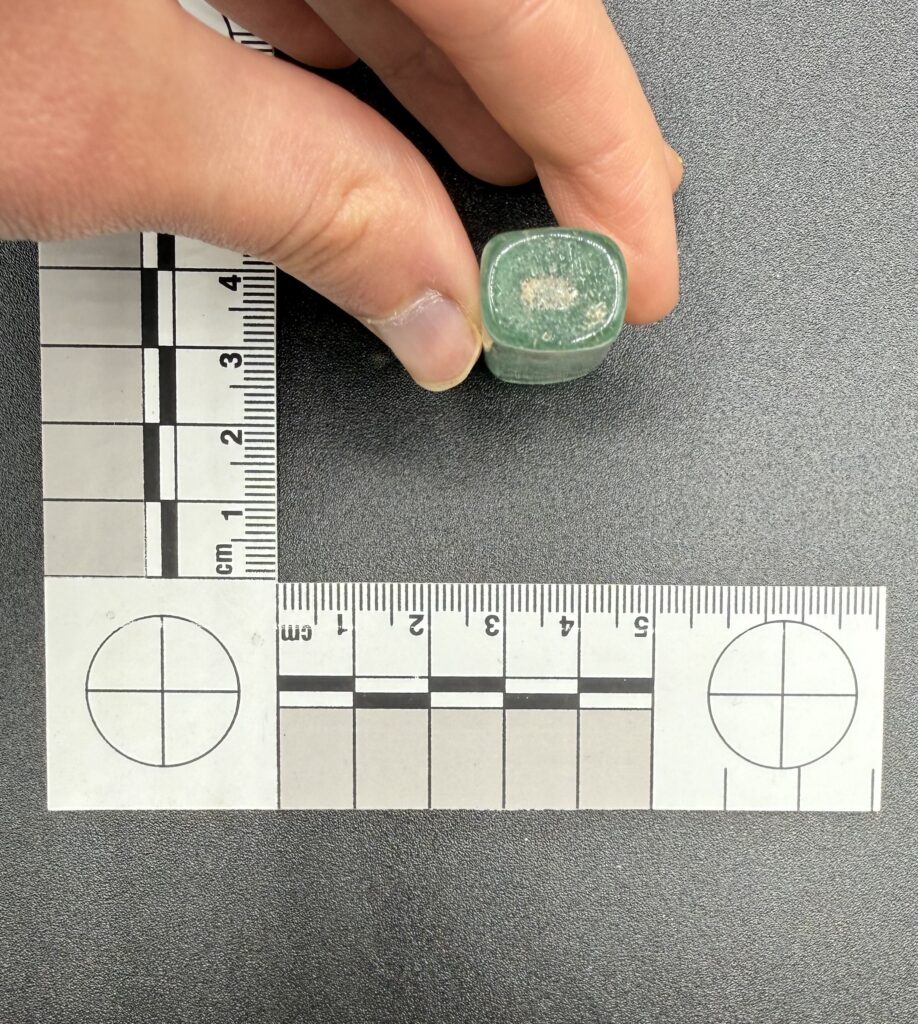
The first vial with a broken neck is thin, with a gather of glass around a hollow tubular core. The general shape of the vial can be determined from looking at the base, which shows the rectangular shape and a core with the same diameter as the neck at approximately 0.7 cm. The length from the base to the shoulder is 4.8 cm.
The vial has an aqua color, which lines up with vials of a matching shape excavated from the Los Angeles Chinatown that also occurred primarily in aqua (Greenwood 1996). According to the Society for Historical Archaeology (SHA) Historic Bottle Website, this color of glass results from iron impurities found in most sand. Without de-colorizing agents, relatively low amounts of iron in sand would produce aqua glass (SHA 2026). The color of the vial can indicate its possible use as Greenwood notes that aqua vials held medicine for travel or to ward off the effects of heat (1996).
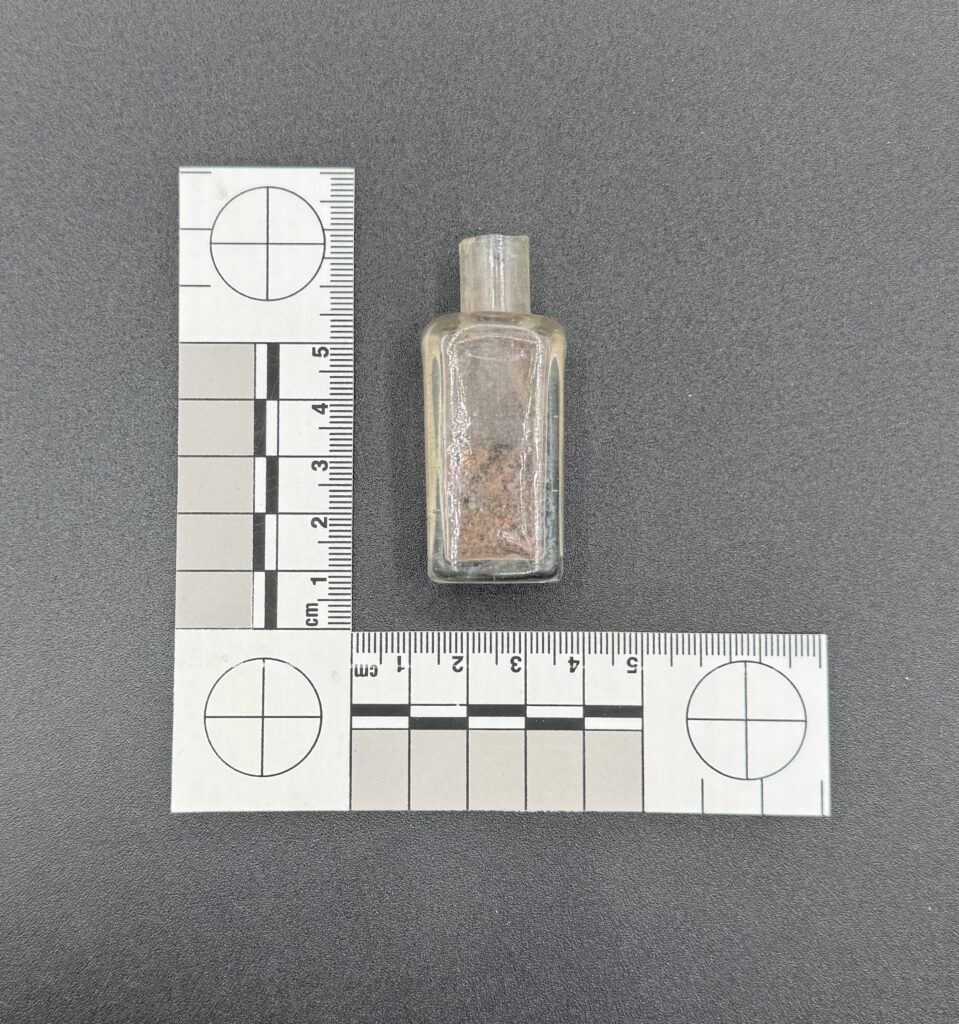
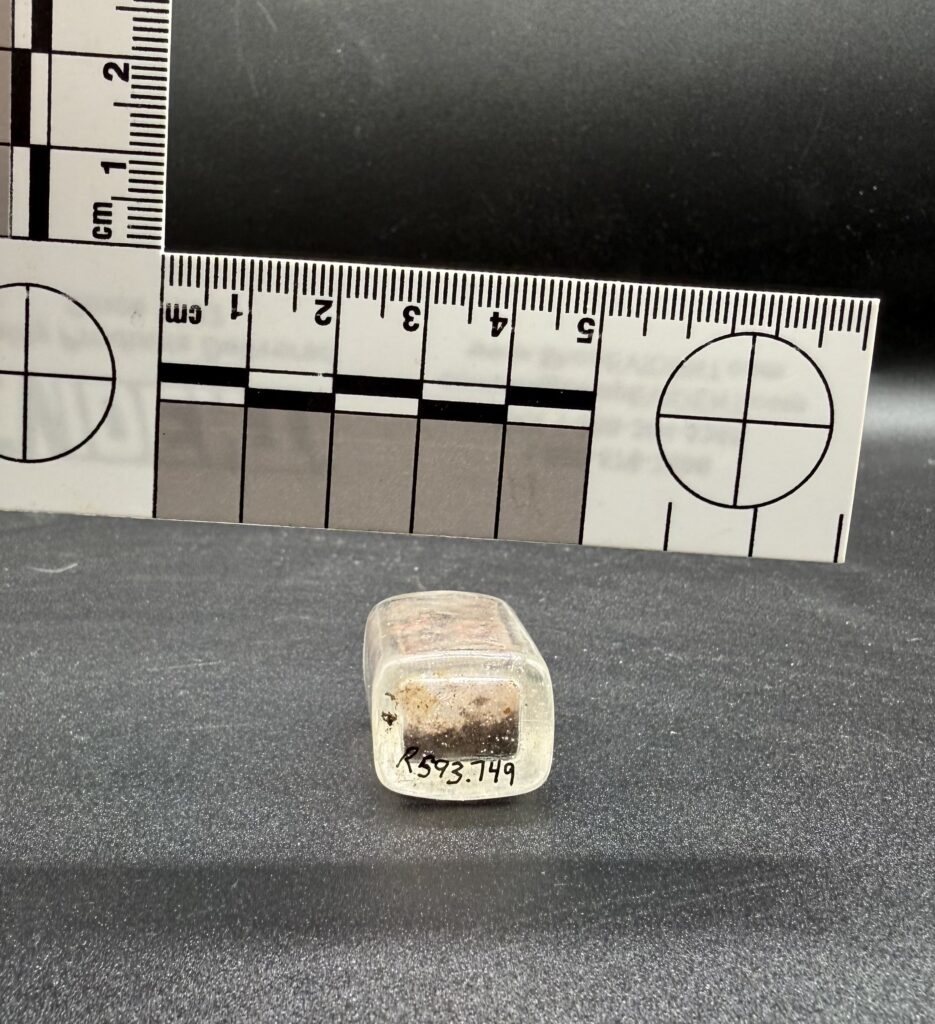
The second vial has a hollow, blown body that is larger and a different shape from the neck. The body is rectangular, with a width of 2.2 cm and a length of 1.8 cm. The length from the base to the shoulder is 4.4 cm, and the diameter of the neck is 1.1 cm.
The glass is colorless, but the grayish brown powder inside has left a rust-colored residue on the interior. The material inside the vial can be sent to the University of Idaho for analysis by Professor Ray Von Wandruska to reveal more about the vial’s specific use. Based on his and his students’ previous analysis of other Chinese medicine vials in the American west, the powder could be magnetite, which was a TCM “stone drug” used to treat a variety of ailments such as chronic asthma, insomnia, and tremors. However, a specific chemical analysis is needed to be certain of the vial’s use (Qualls and Wandruska 2022).
According to Professor Ng, a common misconception of these small glass vials in historic Chinatowns is that they contained opium. Opium was packaged in square metal containers (Merritt and Dixon 2006), but the small blown glass vials had strictly medicinal purposes, and held herbal pills and powders, or thin liquids or oils (Greenwood 1996).
The two vials found at Rock Springs suggest that residents of the Chinatown maintained traditional Chinese methods of healing such as herbal remedies. In addition to offering residents familiar treatments for pain and illness, in other Chinatowns health care also initiated interaction with non-Chinese residents (Greenwood 2026). This also encouraged respect for Chinese doctors from the American community.
Treatments from traditional medicine are still used today in China and the U.S., especially for chronic conditions. In fact, as a white kid growing up in the Chicago area, my first prolonged interaction with a Chinese immigrant was with a Chinese herbal doctor who treated my asthma. I was one of the few asthma patients that he wasn’t able to completely cure with different prescriptions of herbal pills from China, but the treatment did help control it and he did completely relieve my dad of his asthma symptoms. Overall, through the experience I gained respect early on for traditional Chinese medicine such as the substances packaged in these vials.
References
Greenwood, Roberta S. 1996. Down by the Station: Los Angeles Chinatown, 1880-1933. Institute of Archaeology, University of California, Los Angeles. https://www.ioa.ucla.edu/press/down-by-the-station.
Qualls, Claire, and Ray von Wandruszka. 2022. Chemical Analysis of Artifacts Related to the Chinese Diaspora in the American West. Society for Historical Archaeology. 18:27. https://www.youtube.com/watch?v=UtKCPwQWxp0.
Merritt, Chris, and Kelly J. Dixon. 2006. “Opium Paraphernalia.” Chinese in Montana: Chinese Artifacts. https://www.umt.edu/chinese-in-montana/artifact-id/opium-paraphernalia.php.
SHA (Society for Historical Archaeology). 2026. “Historic Bottle Website.” 2026. https://secure-sha.org/bottle/index.htm

Leave a Reply