

Hello everyone! This is Jenna again, with an update on week three of four working at the Chinatown site in Rock Springs. On Monday, it was a cold start to the week with temperatures in the 40s and 50s while we were working and 20+ mph winds! However, we still had a productive day at the site.
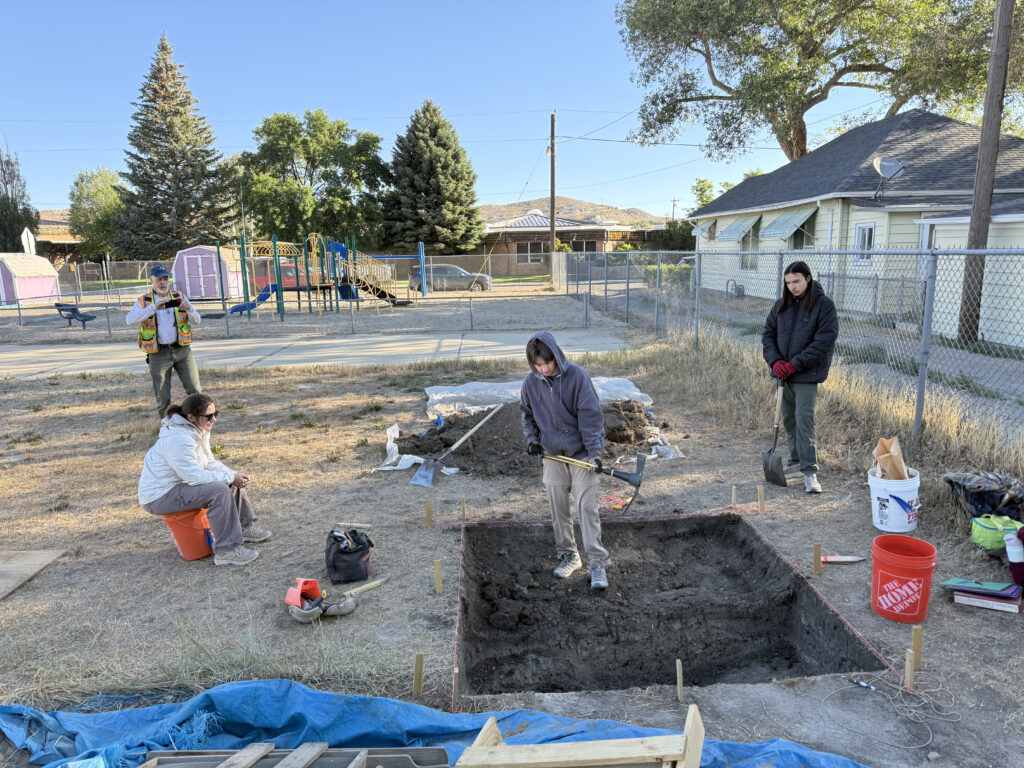
Joining us on the site today and for most of the week were Bob Lew and his grandson Carson Lew-Williams, who are descendants of a survivor of the 1885 Rock Springs Chinese massacre. Additionally, Bob’s grandfather, Lew Fook, had worked in Rock Springs as a coal miner and later as a cook in the 1930s. It was good to meet them, especially since I am working on creating an ArcGIS StoryMap about their ancestors! After getting a tour of the site, they helped us out by screening dirt for artifacts from various units.
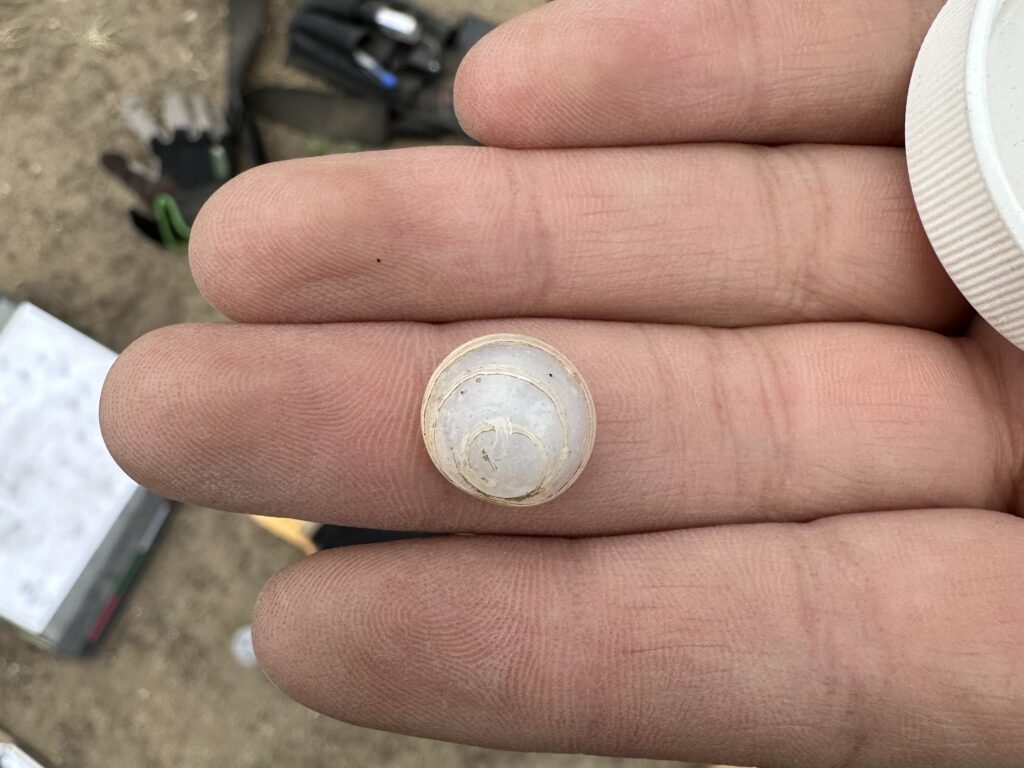
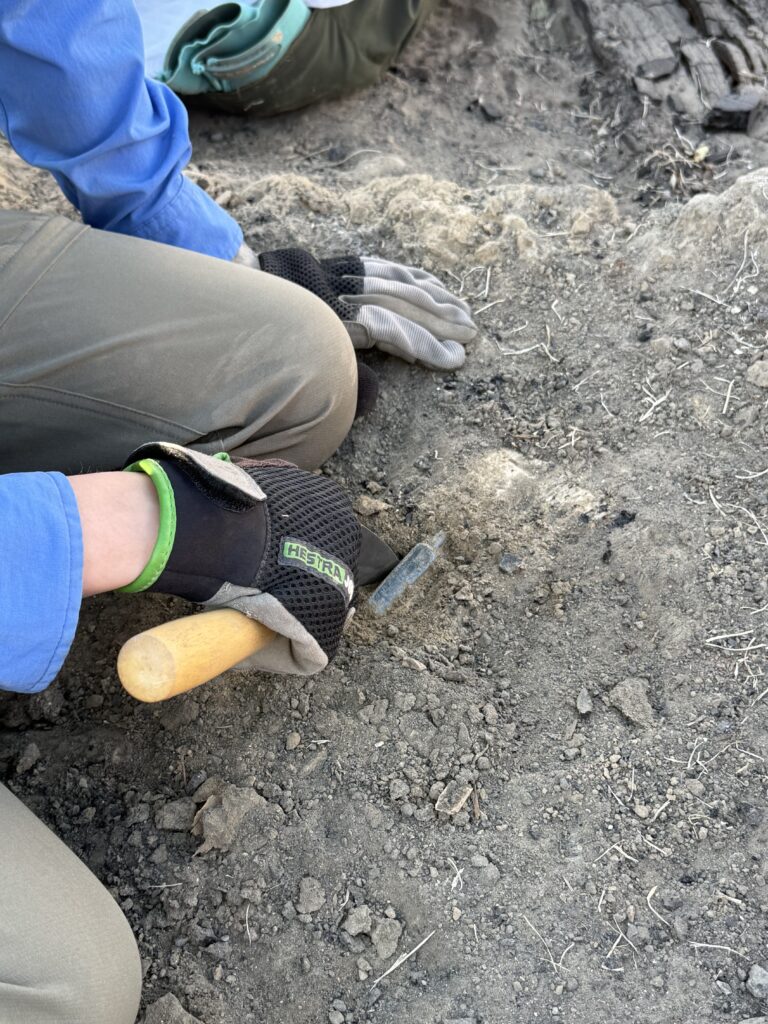
I spent most of the day on the west side of the site, continuing to excavate in the units opened by Dudley. Working together, Lian and I kept uncovering burned wood planks we found at the end of last week. These units are next to a basement that Dudley had excavated last year and found many artifacts in, so what we found here this week could be remains of the building that the basement belonged to. We also found many pieces of Chinese stoneware, window glass, and nails, which are further indication of a structure from the Chinatown. My favorite discovery of the day was a round white stone from a game the Chinese played called waikei (圍棋) in Cantonese. Dudley told us that its swirl pattern is unique to what has been found from the Rock Springs Chinatown site.
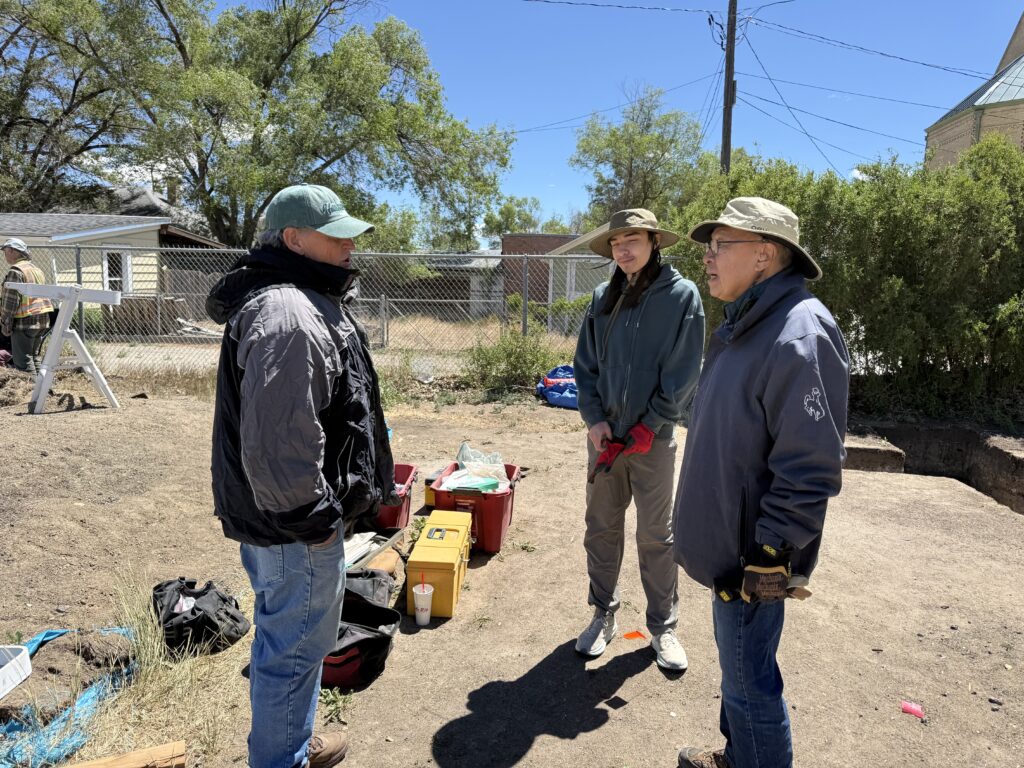
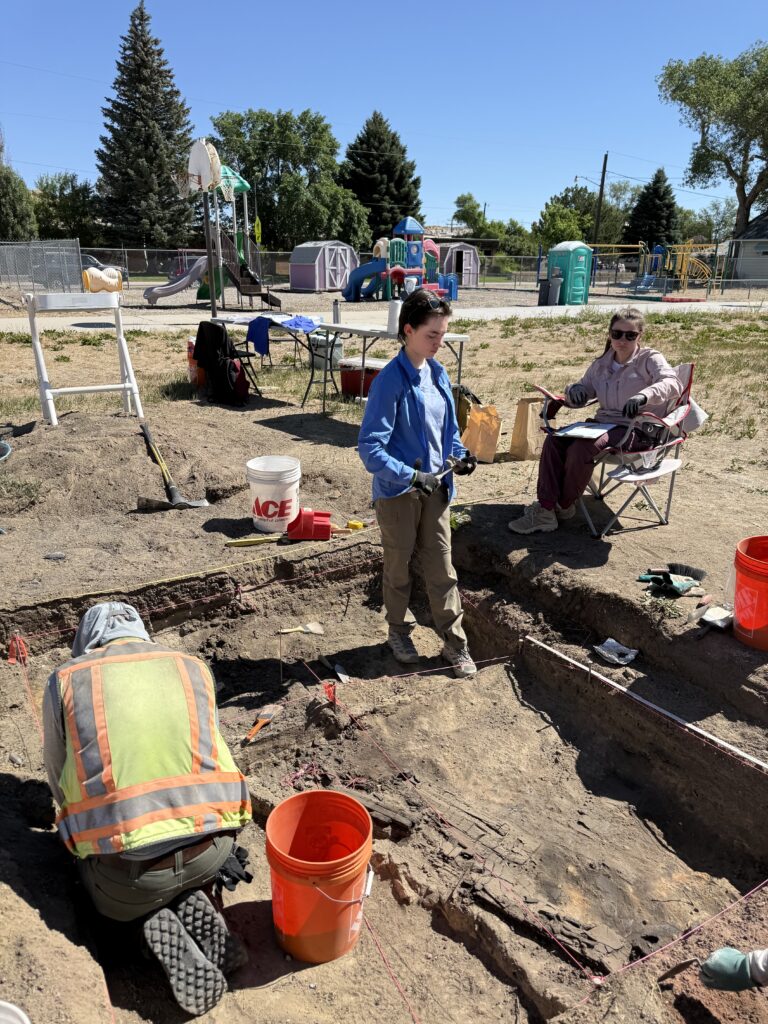
Thankfully the weather on Tuesday was much nicer, which boded well for all the digging that was done. This day I moved back to the other side of the site to work on the new excavation units we opened trying to find another structure from the original Chinatown like the one excavated in 2025. Emily and I, with the help of Paul and Carson, opened two new 1×1 meter units to the north of the two units already started. We spent most of the day digging through the sod and clinker layers to reach cultural soil that could be screened for artifacts. Meanwhile, just south of us, Paul continued to dig in the other units, finding vertically oriented wood that could indicate a structure.
The other exciting discovery of the day was multiple pieces of a white earthenware saucer in adjacent units, which we discovered fit together! Additionally, in the other excavation area, Amber and Alice extracted the large tin can they had been digging down towards over the past couple weeks. The now empty can might have once held black powder based on its shape, opening, and other characteristics. Though all the digging made today a bit tiring, it was good to set up new units for the rest of the week.


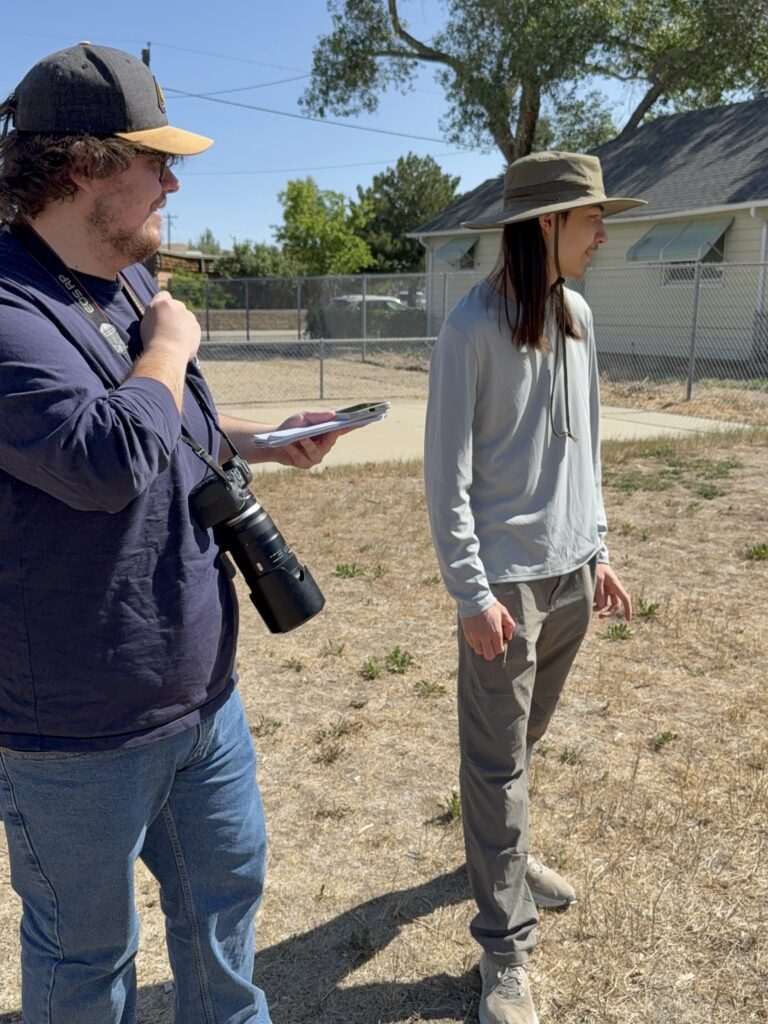
Wednesday was another day of heavy digging in the same excavation units as Tuesday. We got through the clinker layer and found concrete in one of the units. There were also more vertical planks uncovered in northwest corner of unit 19N 3W. We were joined again by Carson and also by Collette Wang, a high school student from Los Angeles who learned about the project through The New Yorker article. She has already been a big help to the project having done data entry of artifact catalogs, and this week she helped at the site as well. Her and Carson contributed to a lot of the screening today! We were also visited by a reporter from Sweetwater Now who spoke to Professor Ng about the site and Carson about his family history in Rock Springs.
On Thursday, Emily, Paul, Lian, and I continued working in the units in the northeast part of the site. Since we had gotten through the clinker layer yesterday, we were anticipating more remains from the Chinatown in the stratigraphic layer we were digging through today. Though we didn’t find any structural remains like we were hoping for, we did find various artifacts including an opium bowl, a medicine vial, ceramics, and glass bottle fragments. Later in the day, Paul also opened up a new unit at 19N 4W, west of the vertical planks we found a couple days ago with the goal to uncover more of that feature.
Meanwhile, on the west side of the site, Carson, Collette, Amber, and Alice worked with Professor Ng on the units that Lian and I dug on Monday. They uncovered more burned wood planks and made many other exciting discoveries including a whiteware plate and a harmonica. After researching and writing about Chinese medicine vials last month, I especially appreciated the intact medicine vial they found!
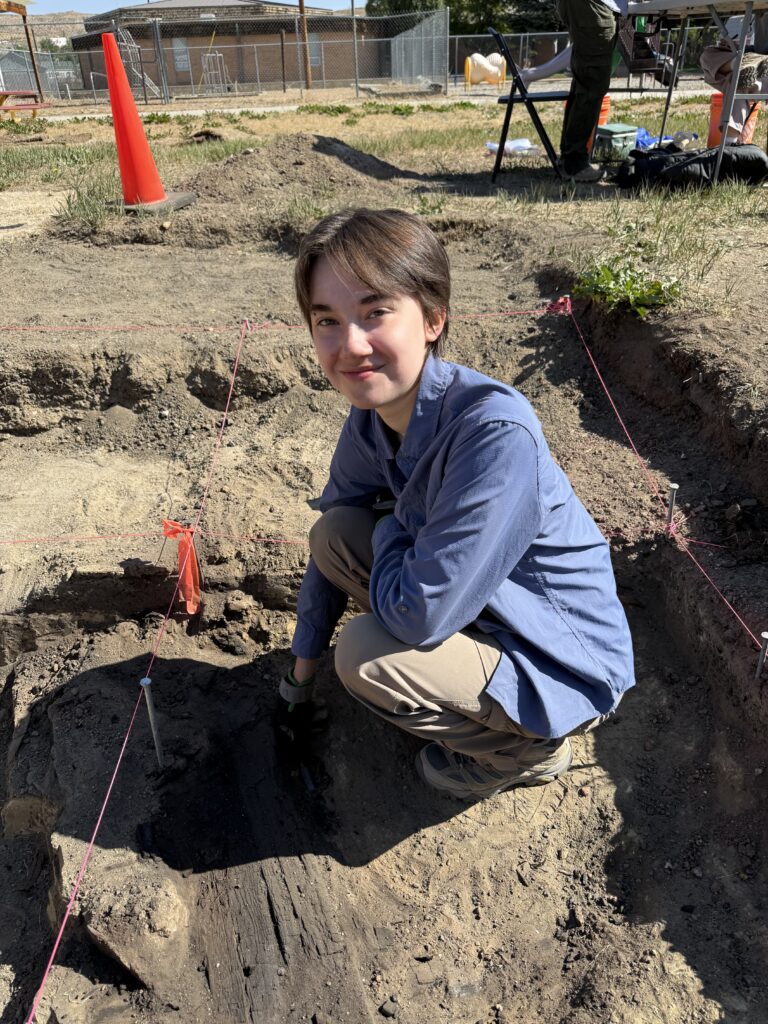
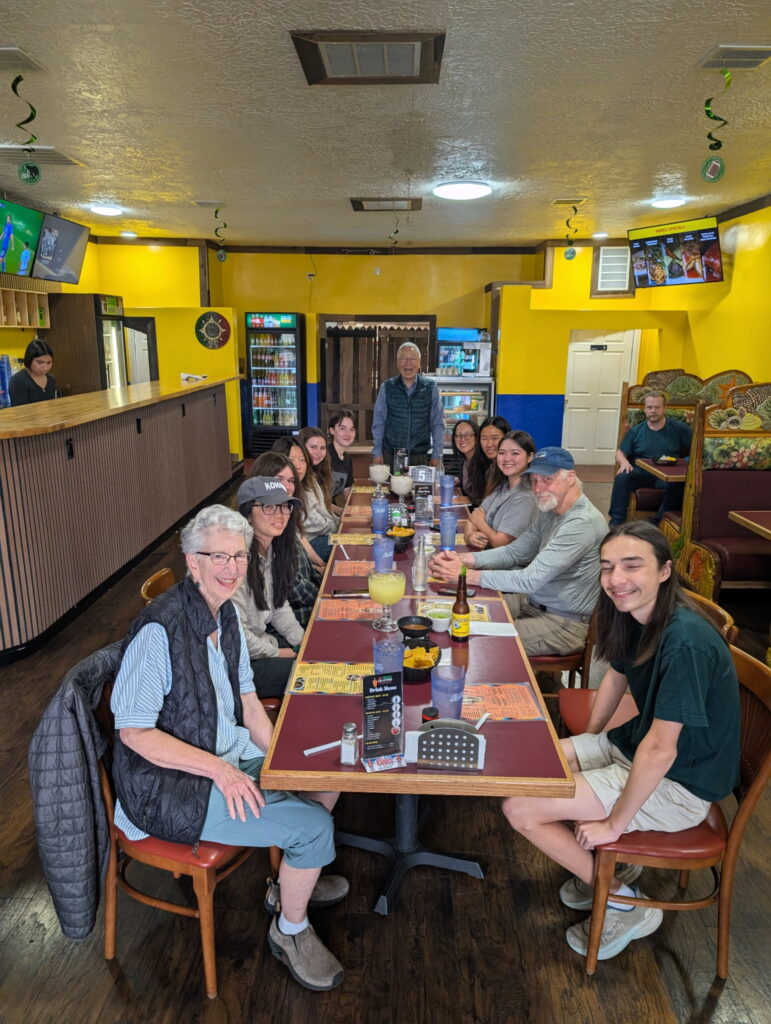
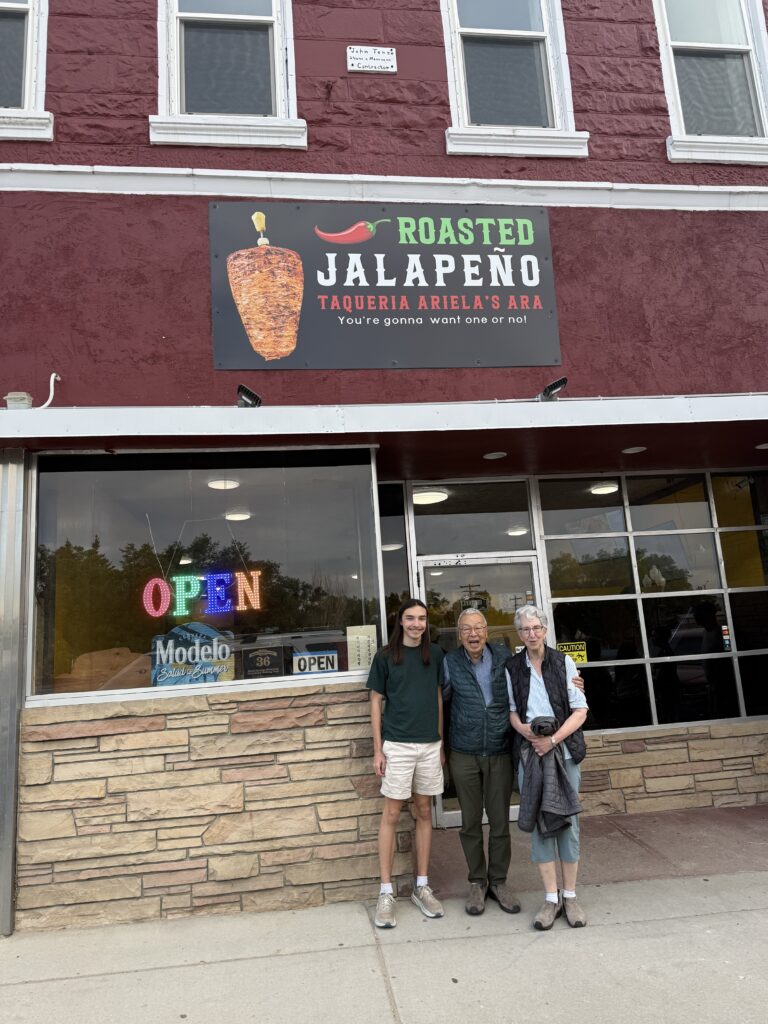
In the evening, Bob Lew treated all of us to dinner at Taqueria Ariela’s Ara on 117 K Street. Before it was a Mexican restaurant, it was called the New Grand Cafe and run by Chinese immigrants such as Leo Hung and volunteers Ricky and Grace Leo’s families. And before the New Grand Cafe, it was a restaurant called North Side Cafe; this is especially significant for Bob, as his grandfather Lew Fook worked there as one of seven partners and a cook in the 1920s and 30s. It was a great meal, and a good time to talk to everyone working on the site and learn more about Bob’s family history.
On Friday, Emily, Paul, and I wrapped up the group of excavation units we had been digging for the past few days. Though we started digging those units with the hope of finding another basement structure like the one excavated last year, after finding disturbed soil deposits and no structural remains, we decided to finish the excavation of that area. We ended up determining that the wood feature we found on Tuesday is a utility pole, likely from when the Washington School was located on the site, which also explained the concrete. Though this was disappointing, significant results aren’t guaranteed where we dig, even if we know Chinatown was located in this area.
However, the rest of the team that continued excavating on the west side of the site made more exciting discoveries today. About half of a whiteware plate was excavated, with a maker’s mark revealing that the plate was made in 1872. Unfortunately, Carson had to leave in the late morning, but it was good to see his grandparents Bob and Marion one more time before they departed. I appreciate their support, especially because seeing the impact of the excavation and research of the Rock Springs Chinese for descendants provides extra motivation! I’ll be thinking of Bob’s kindness and enthusiasm for the project as I continue researching his family’s story over the rest of the month.
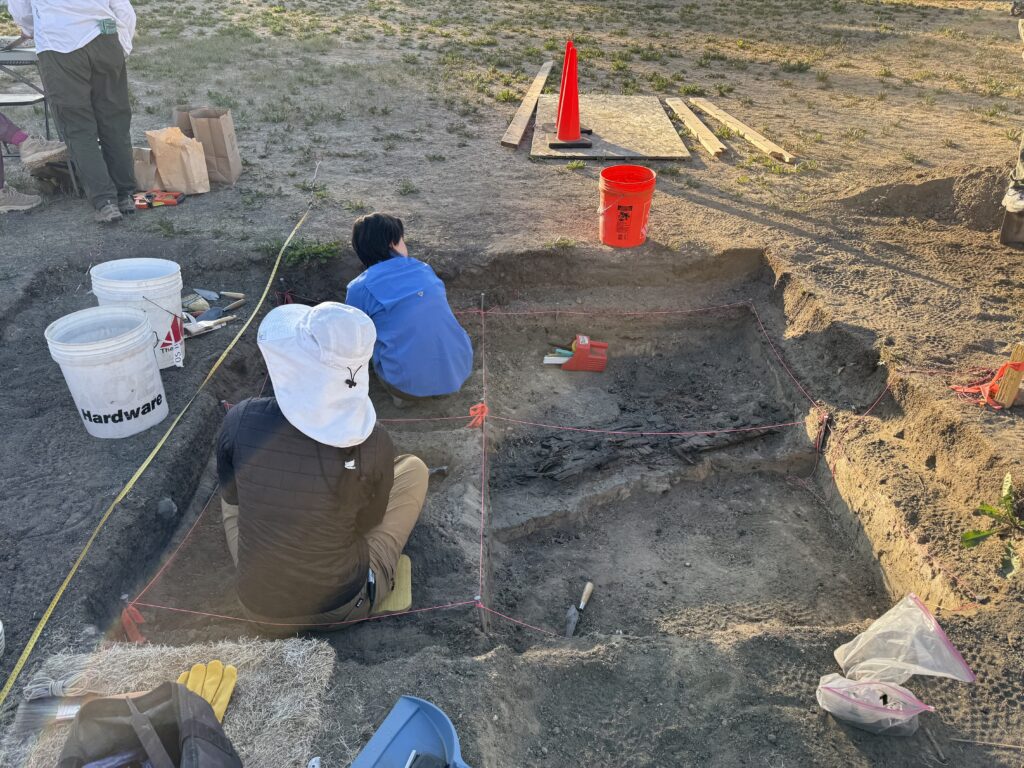
For the last day of week three, all of us moved over to work on Dudley’s units on the west side of the site. A former student of Dudley’s, Emma-Leigh, also joined us to help with the excavation. Early in the morning, there was an exciting moment when I found my first Chinese medicine vial!
Otherwise, I found mostly smaller fragments of glass and ceramics in the unit I was digging, as well as scattered smaller pieces of rotting wood. In the unit she was digging, Collette also found more burned and unburned wood structural remains, and another part of the harmonica found earlier. In addition to continuing to dig in the other excavation units, new units to the south were also opened to be dug more next week.
In the evening, we celebrated the Fourth of July holiday by driving to North Rock Springs to watch the fireworks. It was an impressive show, and a great way to finish the week!

Funding Acknowledgment
Thank you to all of the project funders and donors for making the 2026 field season possible.


Leave a Reply