

Hello everyone! This is Julia and I wanted to share a bit about our experience on the road driving through the Colorado Plateau on our way to Rock Springs, WY! After leaving Iowa and driving through Nebraska and Eastern Colorado we made it to the mountains. We were all in awe driving past 14,000 foot mountains and watching as the alpine landscape turned into mesas and canyons along I-70.
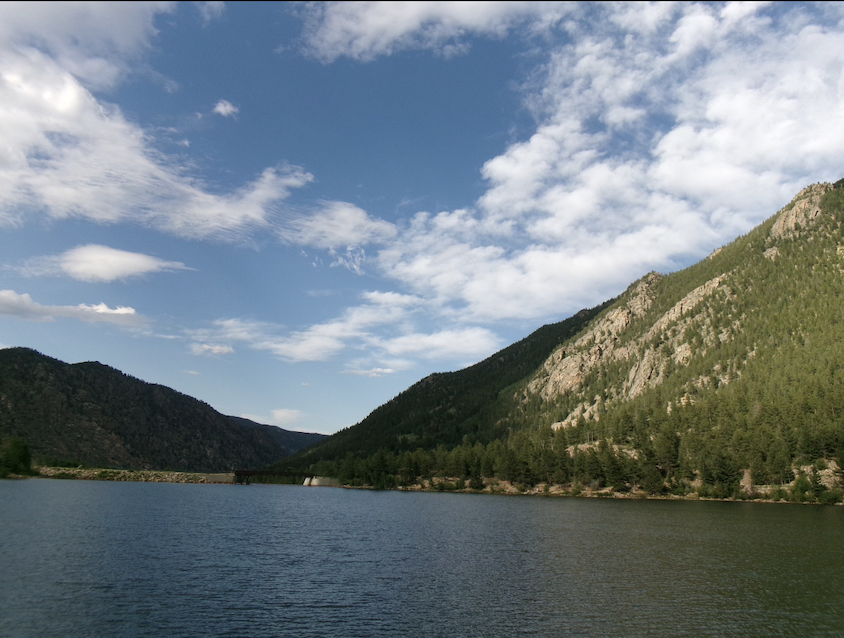
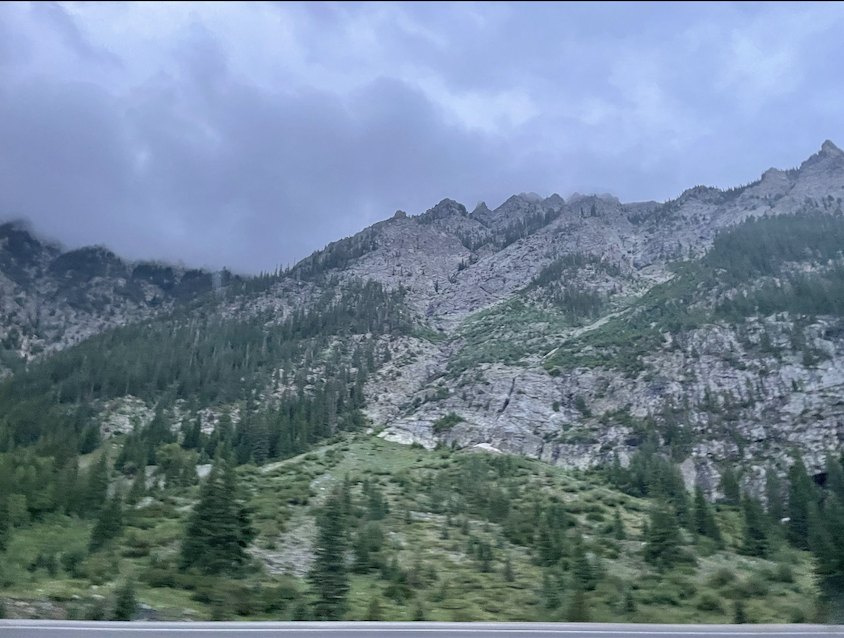
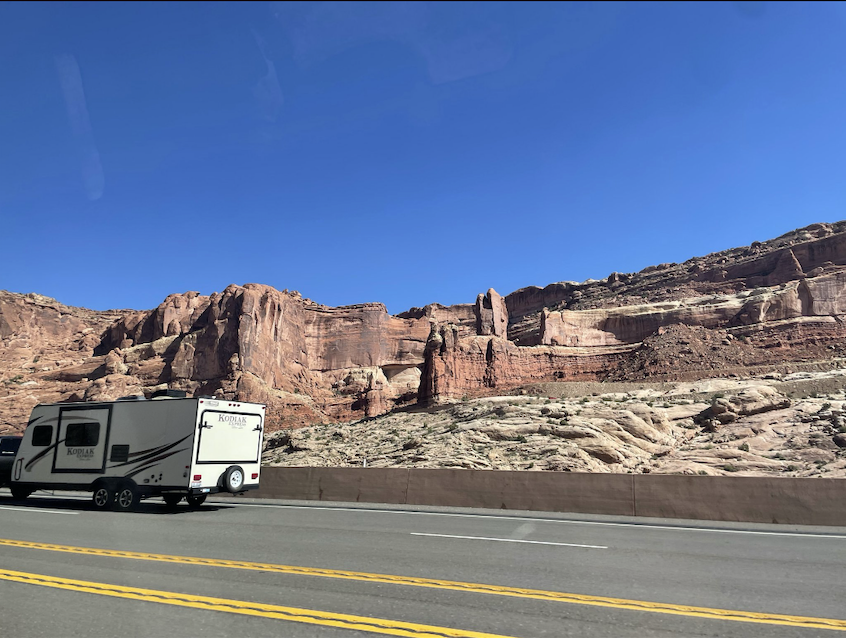
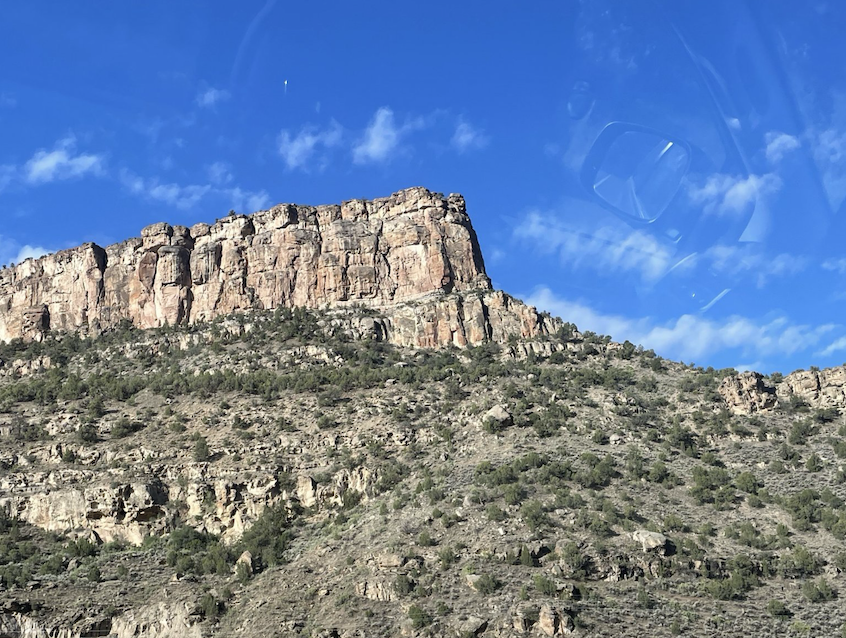
In Utah we had the opportunity to visit two National Parks and a National Monument and camp along the way for the Fourth of July weekend.
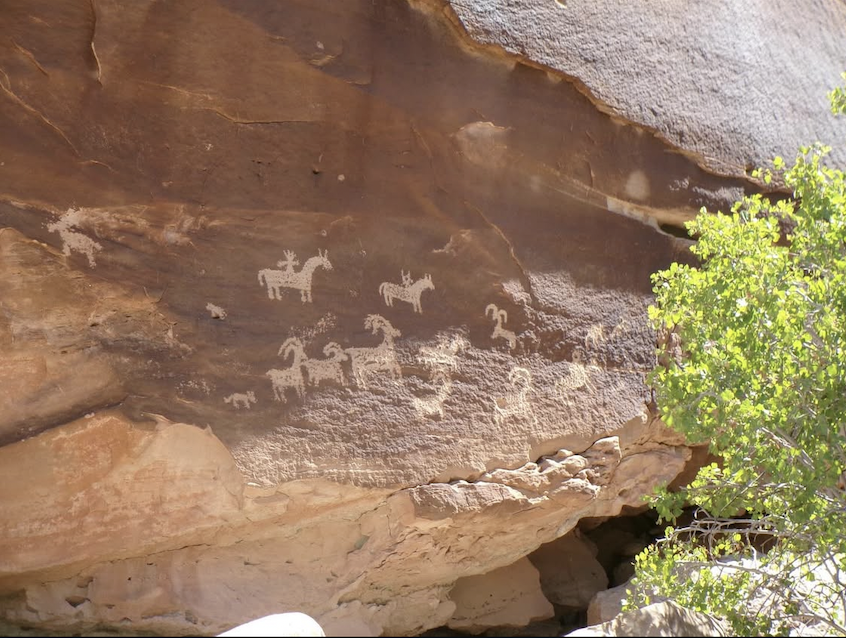
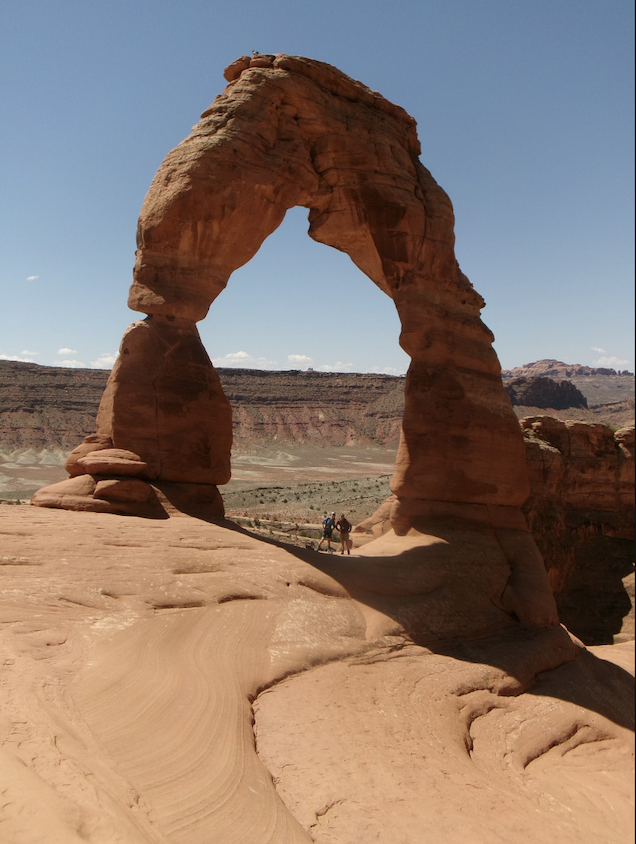
The first park that we visited was Arches National Park where we hiked to the iconic Delicate Arch. Coming from the rolling prairies of Iowa, hiking straight up the sandstone was certainly a change of pace, but we were all completely amazed by the formations of sandstone and limestone around us and so eager to make it to the top. At the start of our hike (3 miles roundtrip) to Delicate Arch, we were able to stop and look at a petroglyph created by Indigenous people who lived here in the past. As historical archaeologists, petroglyphs are usually outside of our field of focus, but the presence of horses in several of the petroglyph figures helped us determine that at least part of the panel was created post-European contact. It was really fun getting to dabble in a different part of archaeology!
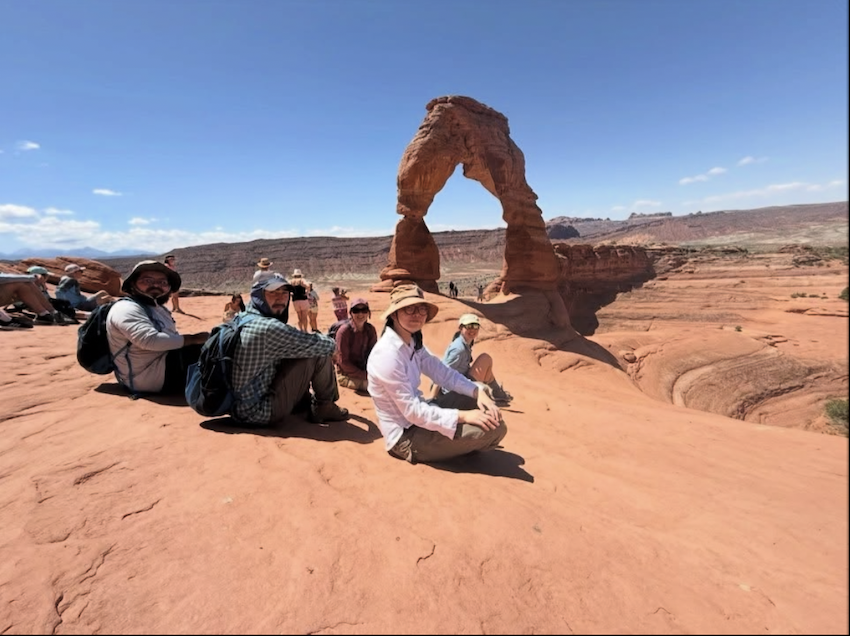
Once we reached Delicate Arch we got to enjoy the spectacular view of the surrounding landscape and of course take pictures under the arch that we hiked all that way to see! A fellow MAP student said that our hike in Arches made her feel like she was in a National Parks advertisement.
Later that day we went to Canyonlands National Park, which was a new experience for all of us. Our limited time and the afternoon heat prevented us from hiking but we got to drive around and visit all the viewpoints in the Island In The Sky section of the park. The landscape can best be described as completely epic and so unusual; it was hard to believe we were still on Earth, let alone in the US, while looking at canyons inside of canyons inside of canyons.


After leaving Canyonlands we headed out to our remote campsite near Castle Valley run by the Bureau of Land Management. At our campground we watched the sun set over the desert, ate delicious brats that we cooked, had angel food cake with berries, and reflected on our wonderful day.
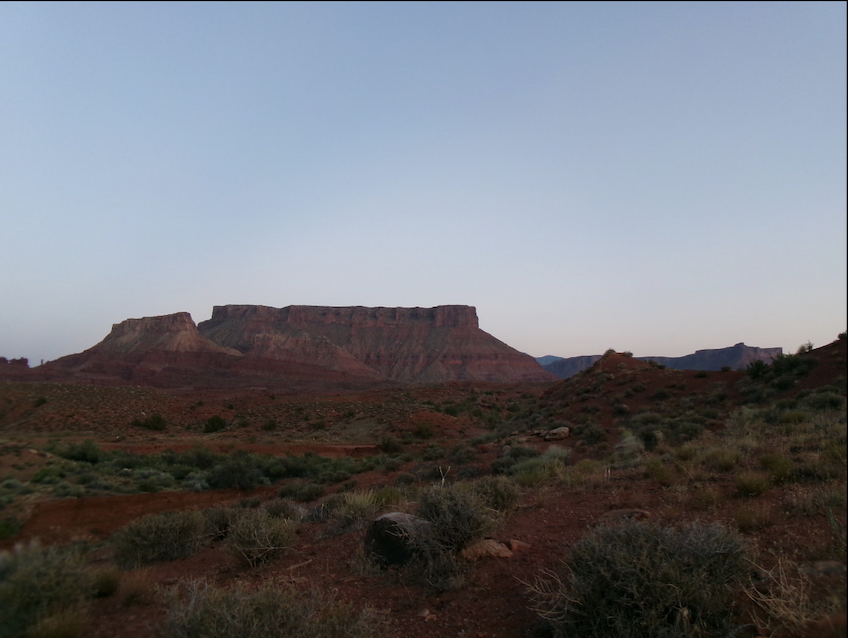
The next day we headed north along the Utah-Colorado border to Dinosaur National Monument. We got to stop at the visitors centers on both sides of the park (Colorado and Utah), visit with retired NPS employees Peter Williams and Tamara Naumann at their lovely home, and stay at the wonderful Green River Campground where we enjoyed wading in the river and having some much needed downtime.
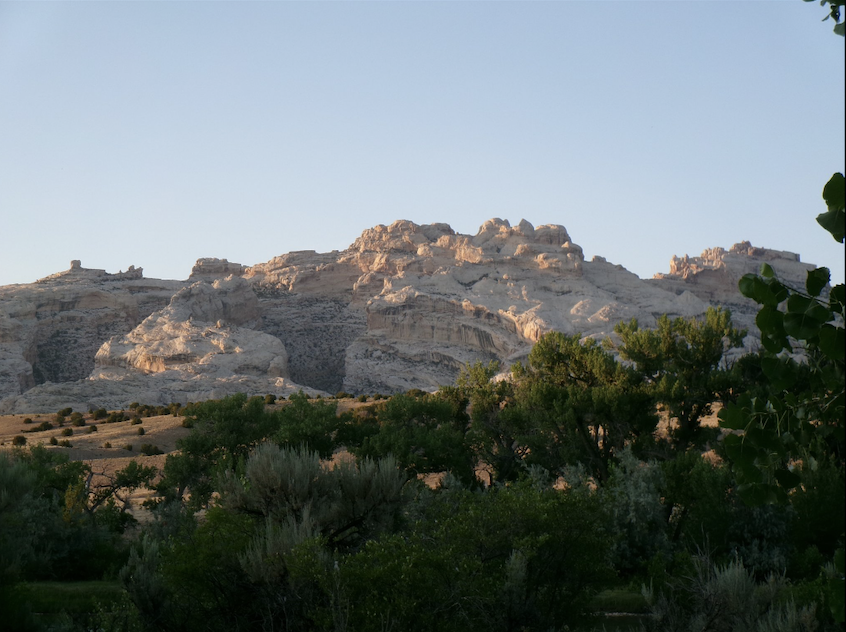
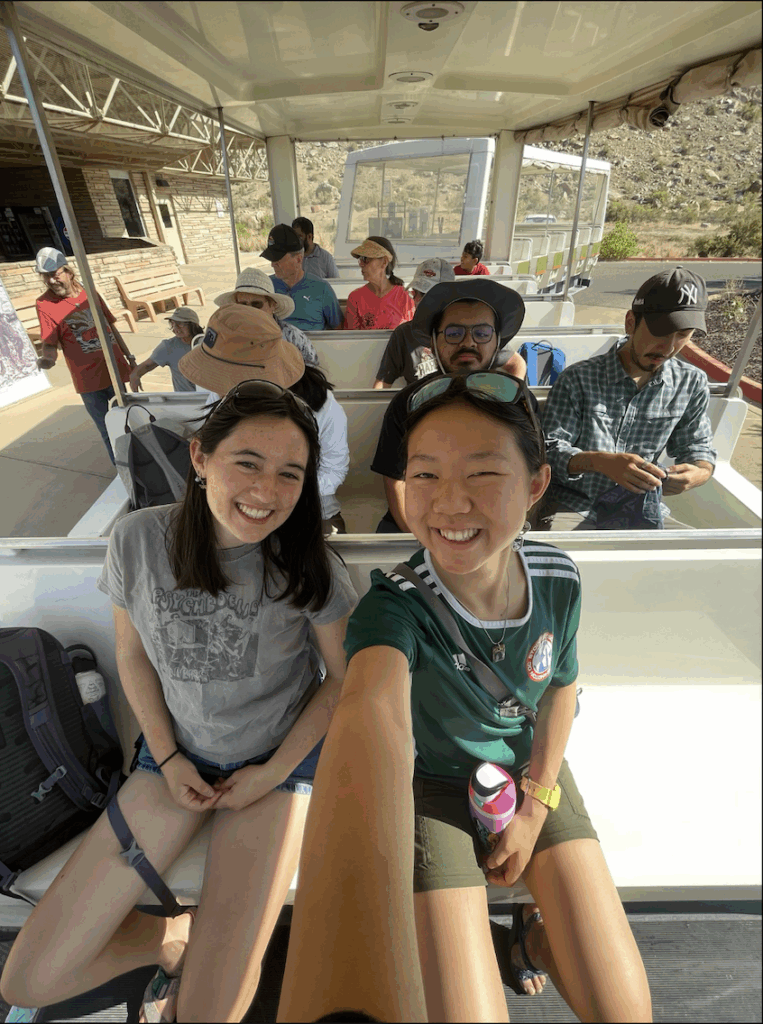
At the Dinosaur NM visitor center in CO we learned about the rivers that formed the park’s canyons and its famous dinosaur fossil deposits. At the visitor center with the Quarry Exhibit Hall visit enter, we had the opportunity to see (and touch) real dinosaur bones. While archaeologists and paleontologists are very different, we were able to appreciate how wonderful and unusual this massive amount of intact deposits is. One student said, “I’m not a paleontologist, but I thought those bones were ‘fire.’” We also thought it was amazing that the bones were preserved for all to see just like Earl Douglass (the paleontologist who first discovered the dinosaur fossil deposits in Dinosaur National Monument) had hoped.
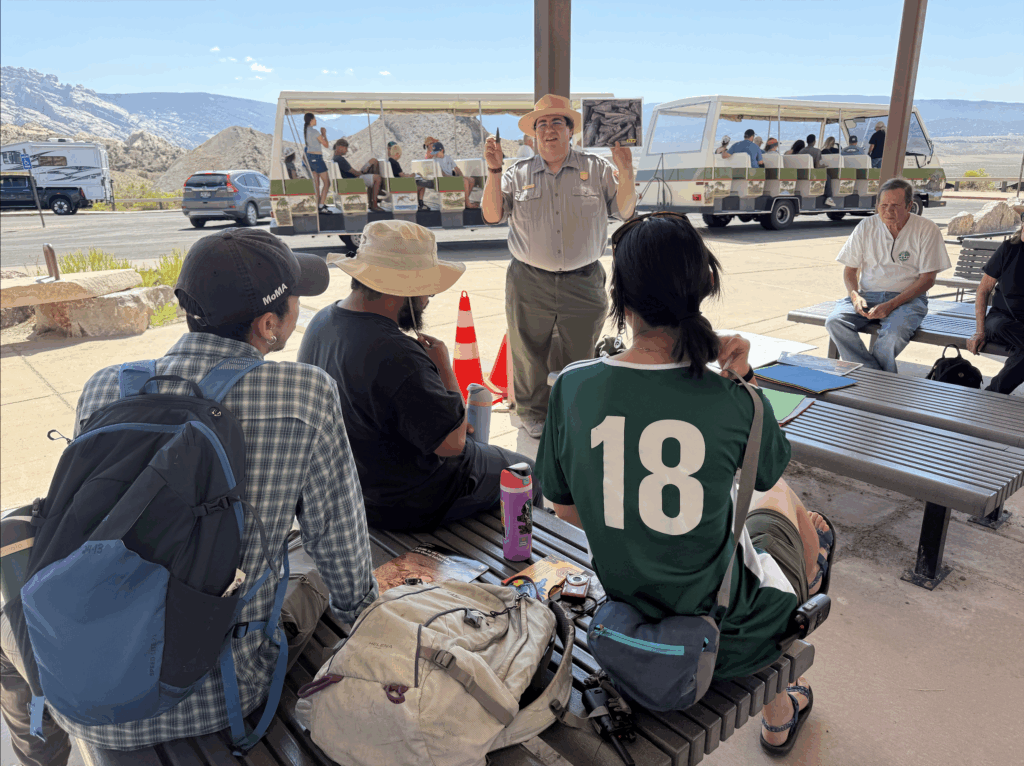
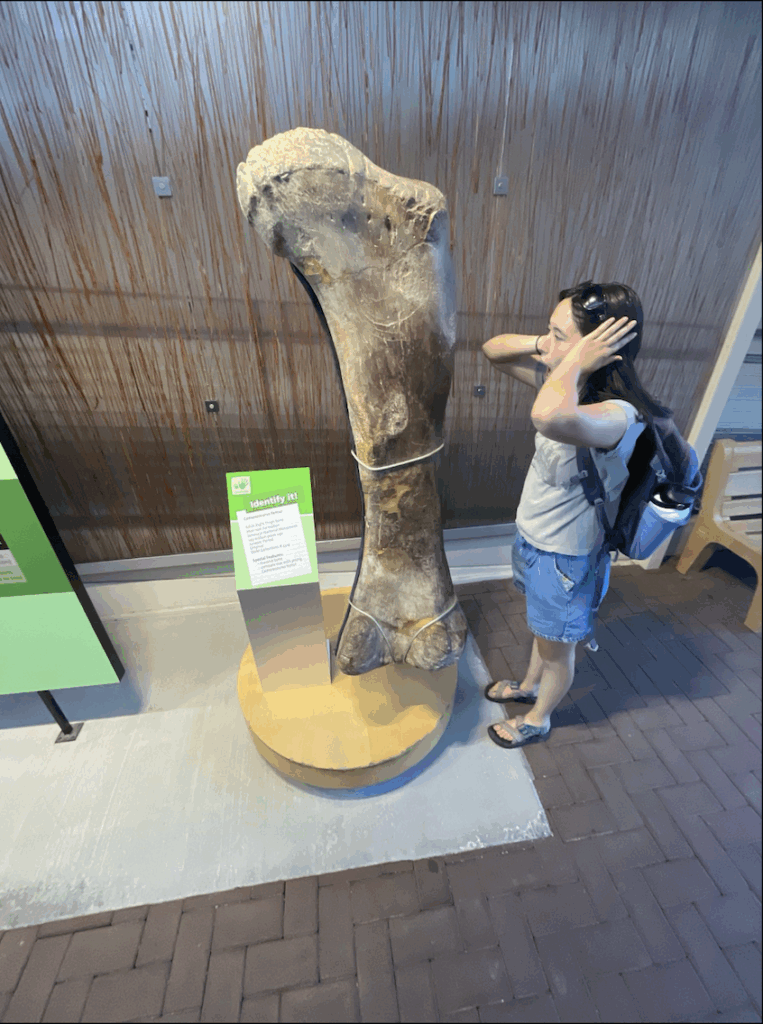
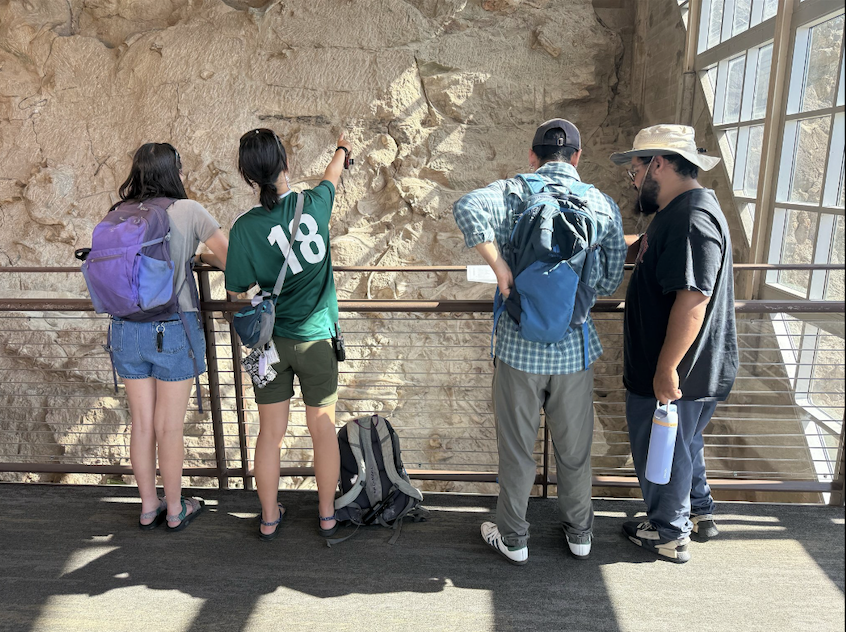
We had so much fun and so many amazing experiences out in the desert in and around the Four Corners/Colorado Plateau region, but we also learned that our experience was not universal.
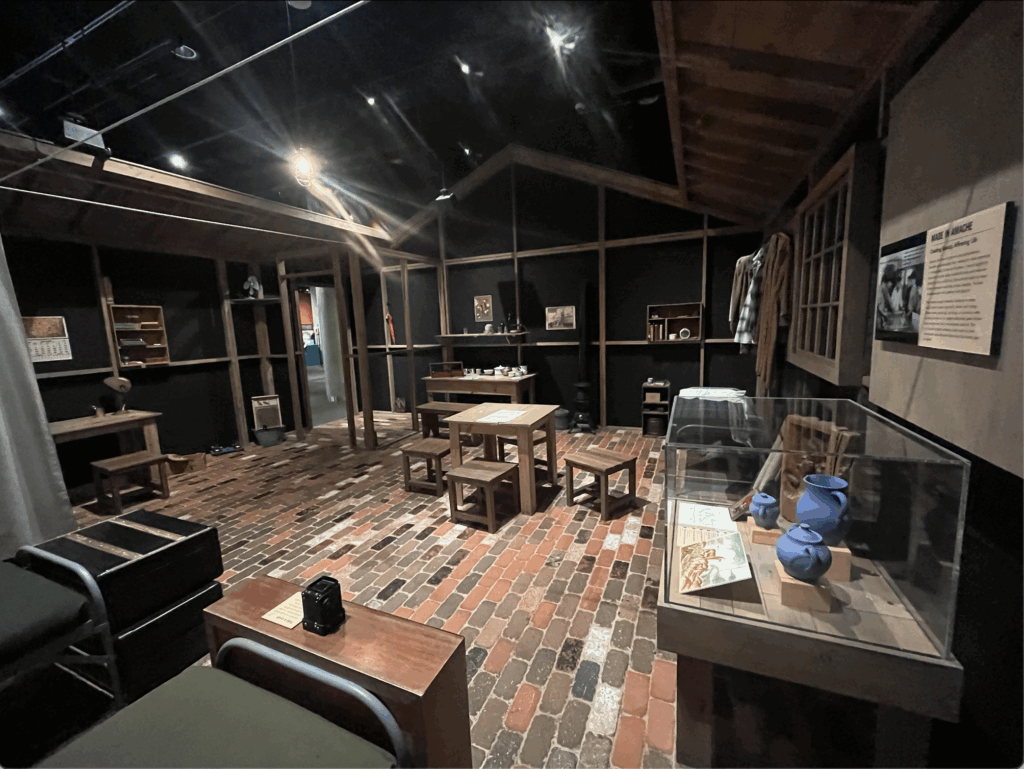
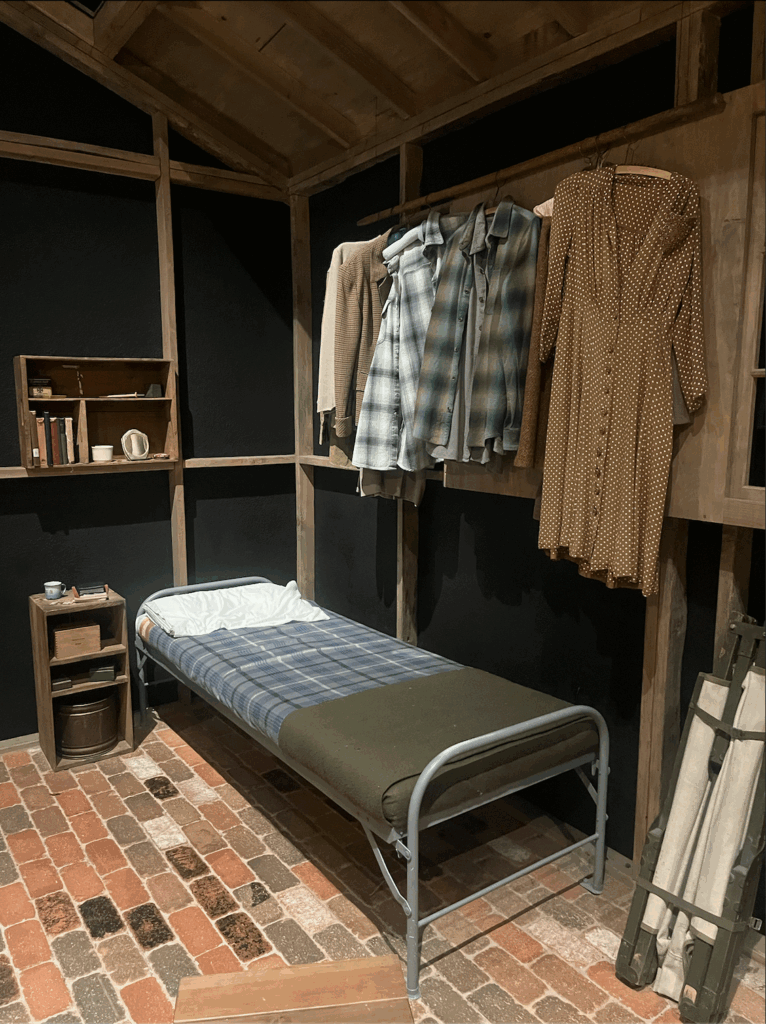
During WWII, the states of Colorado, Utah, and Arizona had Japanese American incarceration camps where Japanese Americans were forced to give up their homes and daily lives and relocate to prison compounds where they lived in cramped quarters under harsh conditions. Amache, located in Colorado, was one of the ten large incarceration camps and we saw a reconstruction of the barracks interior at the History Colorado Museum in Denver.
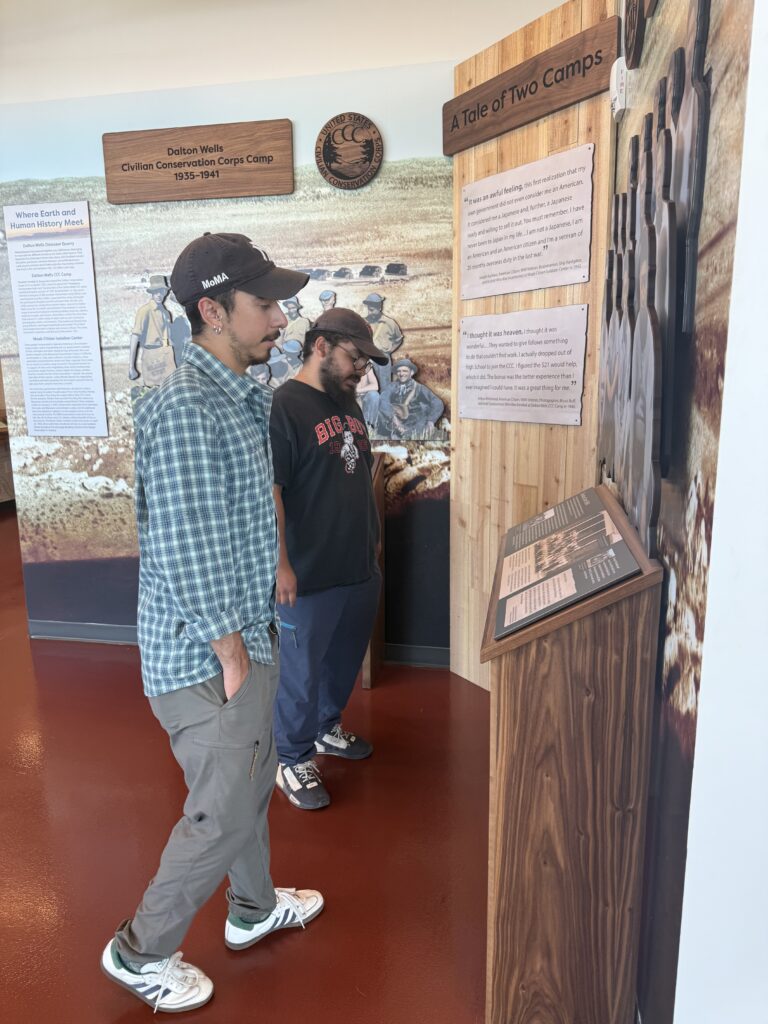
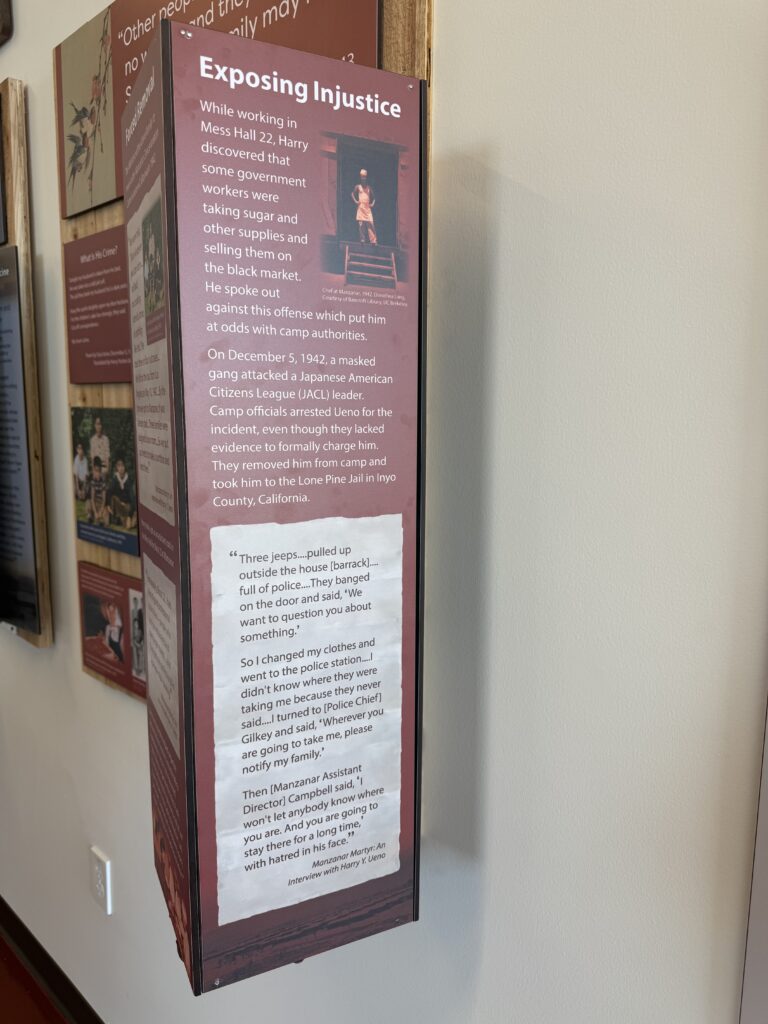
We then traveled to Utahraptor State Park to learn about the Moab and Leupp Isolation Centers located in Utah and Arizona respectively. These centers served as prisons and punishment for Japanese Americans in the large camps who were labeled “troublemakers” because they resisted the conditions of their incarceration. At the Utahraptor visitor center we read the stories of several of these resisters including Harry Ueno, a Japanese American who had been born in Hawaii, grew up in Japan, and returned to the US as an adult.
Visiting these sites and reading these stories, I was reminded of some of the experiences of the Chinese American/Chinese immigrant residents of Rock Springs, Wyoming. While China and Japan are distinctly different nations, the racialization of East Asians means that people from China and Japan are often subject to similar treatment in the US. For example, the Chinese Exclusion Act (1882-1943) was the basis for the restriction of Japanese immigration in the early 20th century. Additionally (and partially as a consequence of these laws), Chinese and Japanese Americans are often treated as perpetual foreigners in the US. During the late 19th and early 20th centuries, many were transnational–moving back and forth between their ancestral homelands and the US–but part of the reason they traveled across the Pacific often was because of anti-Asian exclusion at the local, state, and federal level.
Japanese Americans were incarcerated during WWII because they were perceived as more loyal to Japan than to the US despite the majority of them being born in Hawaii or the mainland. American-born Chinese residents of Rock Springs were required to rigorously prove their rights to citizenship in a way white Americans did not, and on some occasions were still deported to China despite these efforts. Their status as perpetual foreigners made Japanese and Chinese Americans easy to scapegoat in times of hardship for the US. WWII Japanese incarceration was in part a way for the white American public to feel justice for the lives lost in the war, despite Japanese Americans not being at fault for the war or the lives lost.
Similarly, the mob that perpetrated the Rock Springs Chinese Massacre was led by white coal miners who blamed the Chinese labor force for their poor working conditions instead of the corporations who held power. The perpetual foreigner narrative is still persistent in the US today, and makes it difficult for our nation to reckon with anti-Asian racism in the past as many people struggle to relate events such as the Chinese Massacre as acts as being committed against Americans; rather, they see them as acts committed against foreigners in our land. Archaeological investigations are particularly important in these cases because they can preserve and expand on histories that people try to deny and destroy.
We are so grateful for this experience exploring and learning in the Southwest and it has brought us to our fieldwork with this additional perspective. We would like to thank the Grinnell College Four Corners Fund for making it possible!


Leave a Reply