

Hey y’all. This is Jorge, one of the four new summer research assistants for the Wyoming Chinatowns project. This is my first blog post here and I’ll be discussing an opium-related artifact. While doing some cataloging of artifacts that were excavated from Rock Springs, Wyoming, in 1991, I came across these sherds from opium smoking paraphernalia known as an opium pipe bowl.
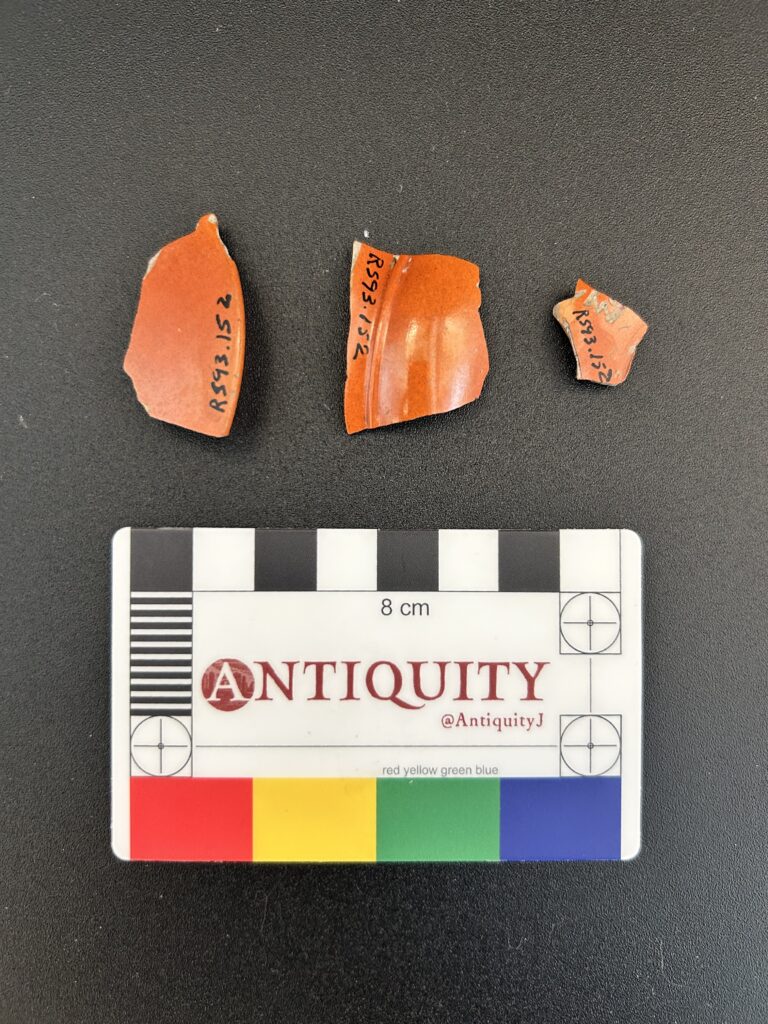
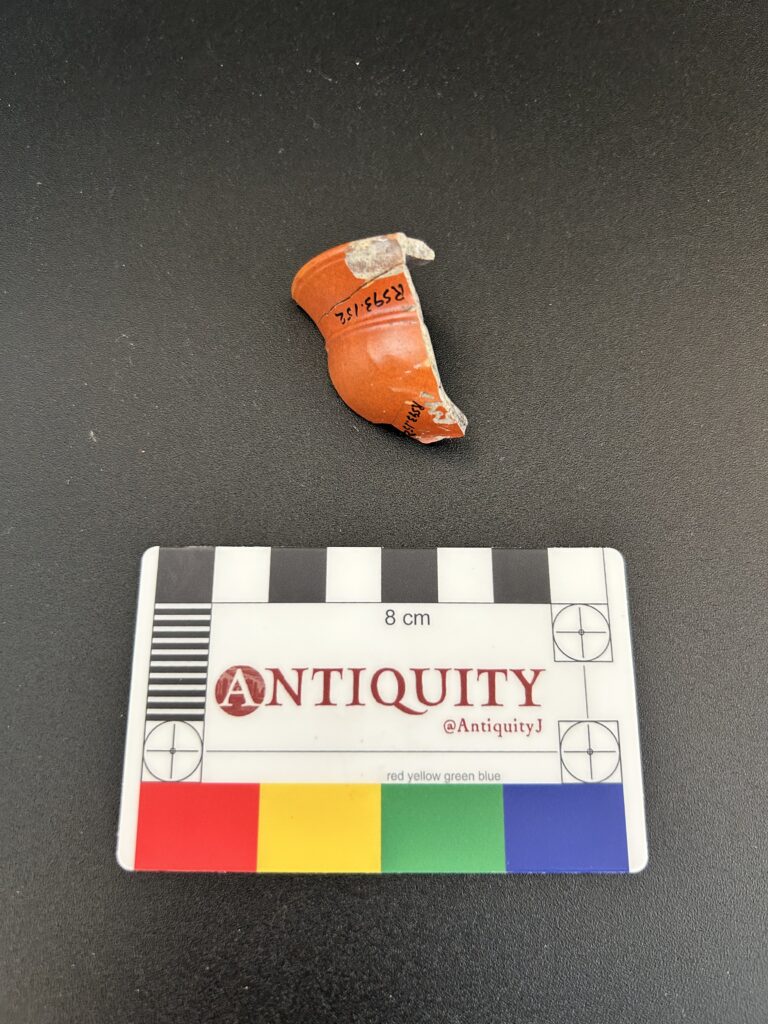

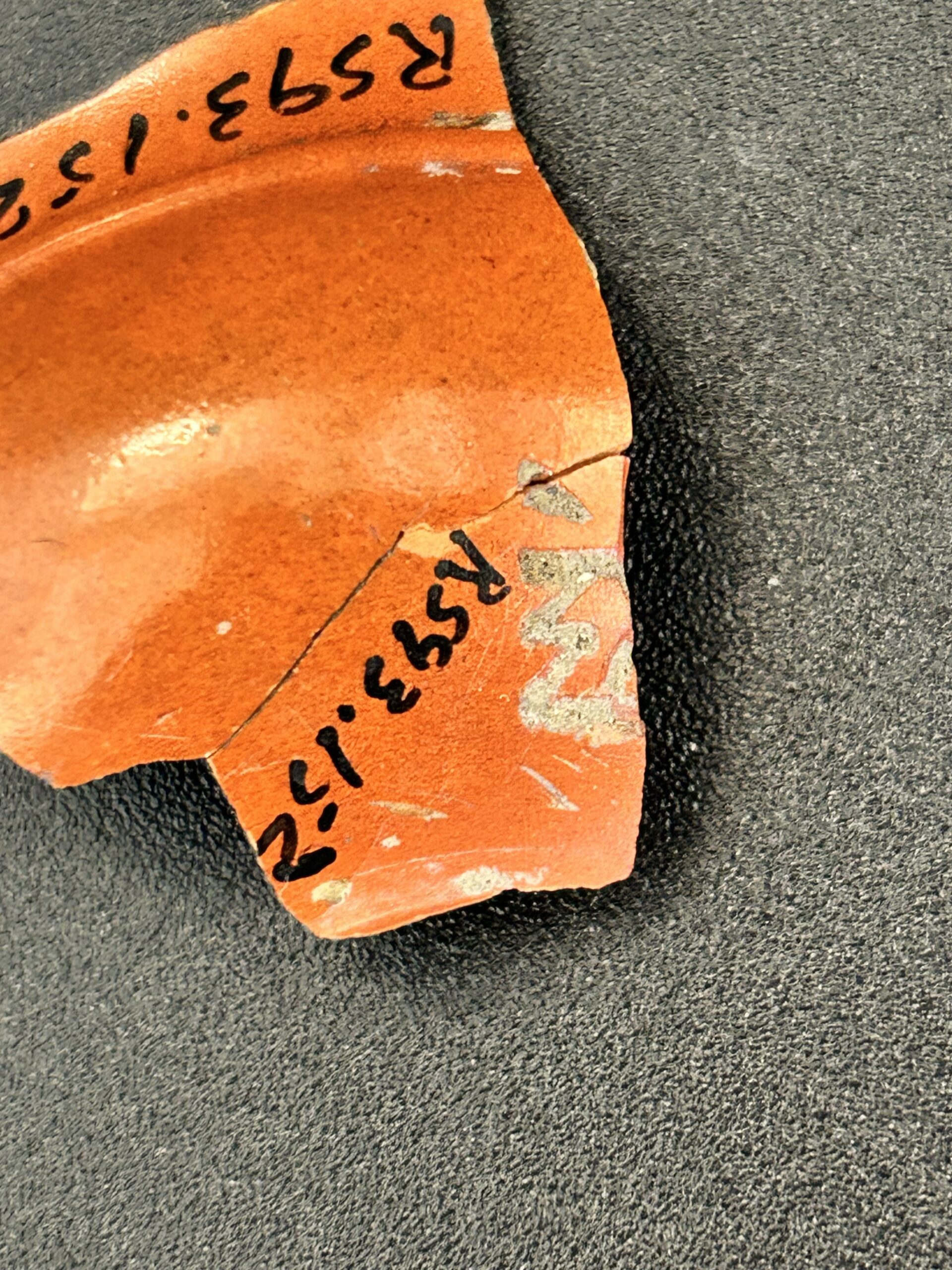
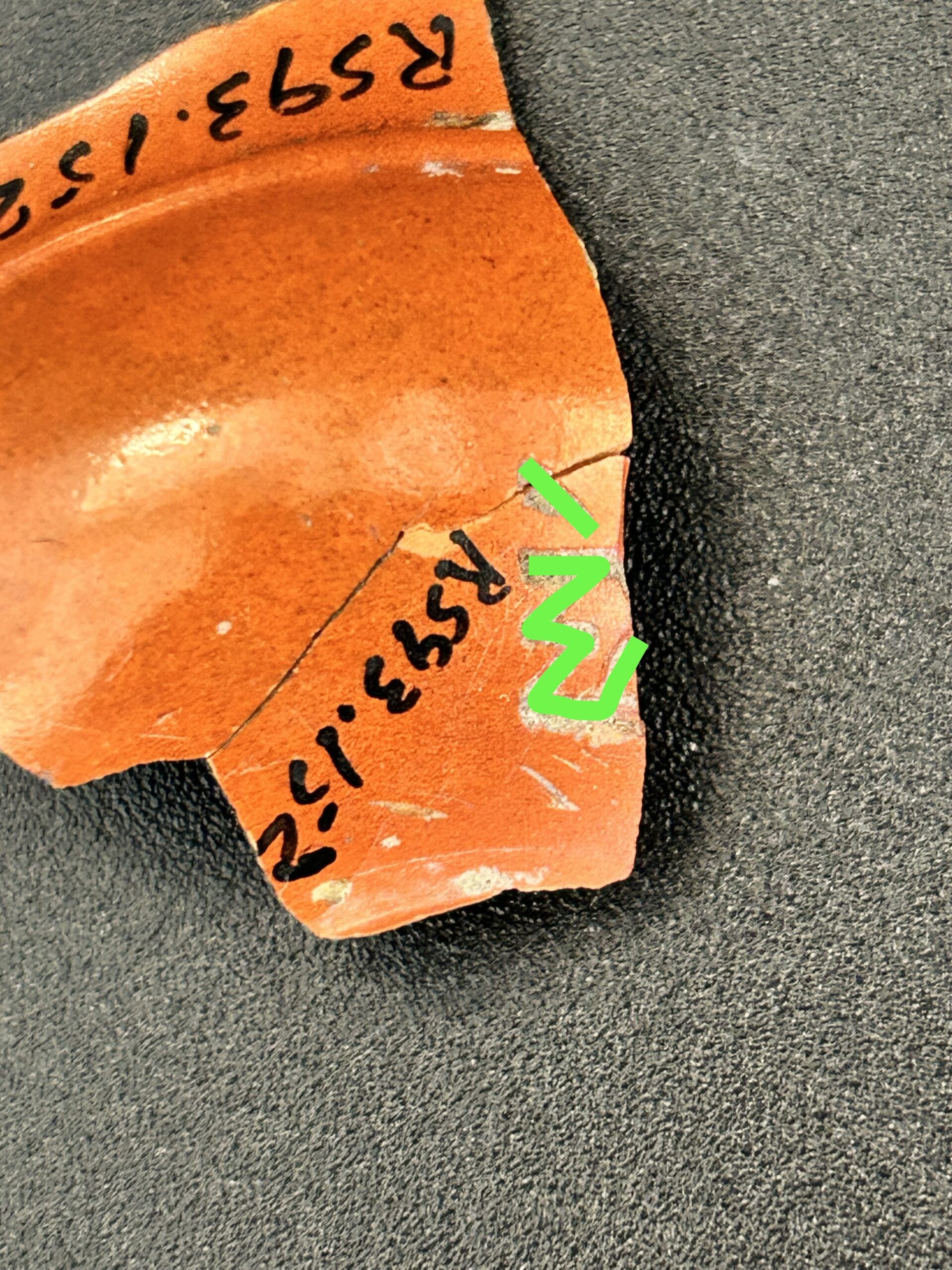
These three earthenware sherds made up a portion of a bowl’s top, rim, side, and shoulder (which would give me a lot to work with when trying to determine the technique that was used to create the bowl) and were coated with an orange glaze. I measured its rim to be 7.5 cm in diameter, with only 16% of the rim present on the rim sherd. Additionally, after closer examination, I noticed a Chinese character visible on the base of the bowl, which I will get into later in this blog post. Using Wylie & Higgins’ (1987) catalog of opium paraphernalia that they found at Riverside Chinatown, I concluded the following:
Pipe Bowl Manufacturing Technique: Two Piece Mold with Slip-Welded Top
After a close comparison with other artifacts in the catalog, I found that the bowl matched Type A6 from Riverside Chinatown and was manufactured utilizing a two-piece mold with a slip-welded top (Wylie & Higgins 1987, 347 & 371). This meant that the top and the body of the bowl were molded separately and joined together with clay. When separate, the top and body were hand-pressed into molds, which allowed the maker to access the interior during production. To add, the rim sherd has a faint horizontal line on the exterior, showing where it would have been joined together with the base. Wylie and Higgins (1987) classify this technique of bowl production as inexpensive due to their thin walls, few treatment surfaces, and overall plainness.


Chinese Character on the Base
Going back to the Chinese character that I noticed on the base of the bowl sherd; I had a hard time identifying said character because it was missing its other radical. I turned to Professor Ng and Avajane for help, and we all decided that the radical present on the sherd was the Chuò radical (辶), which holds the definition: “to walk”. This portion of the Chinese character was most likely made through the means of a “negative stamp,” a stamp that Wylie and Higgins (1987, 353) state is made when the character stamp is pressed into the bowl surface (which makes the mark to appear incised). The exact meanings of these characters are not definitive and up for interpretation due to the fragmentary nature of ceramics (as seen in this case) and the possibility of varying translations/alternative meanings.

The finding of opium paraphernalia in Rock Springs Chinatown is not a monumental discovery; however, it does give us meaningful insight into the lived experiences of Chinese migrants. Looking past its association with addiction, opium was historically consumed as a means of mitigating joint pain and other physical ailments (International Agency for Research on Cancer, 2021). Grueling labor and harsh conditions were not uncommon for Chinese coal miners who resided in Rock Springs Chinatown, and such forms of pain management most likely played a major role in the day-to-day survival of Chinese miners. This finding acts as an entryway to the strategies of adaptation and resilience used by this marginalized community in navigating physical and social hardship.
Sources
International Agency for Research on Cancer. 2021. Exposure characterization. Opium Consumption – NCBI. https://www.ncbi.nlm.nih.gov/books/NBK586388/
Wylie, Jerry, and Pamela Higgins. 1987. “Opium Paraphernalia and the Role of Opium at Riverside’s Chinatown.” In Wong Ho Leun: An American Chinatown, edited by Great Basin Foundation, 2, Archaeology:316–84. San Diego, CA: Great Basin Foundation. [This book is out of print.]


Leave a Reply to Laura W. Ng Cancel reply