

This is a follow-up post to summer research assistant Amber Remington’s post on different types of ginger jars that she found in her research.
We received a wonderful email from subscriber Myron Lee who shared that the green hexangonal stonewares jars did not always hold preserved ginger! He sent Amber and I photos of similar jars with wicker strapping and intact labels, but these have the words “PRESERVED KUMQUATS” and a colorful image of the small citrus fruit. The photos below are used with permission of Myron Lee:
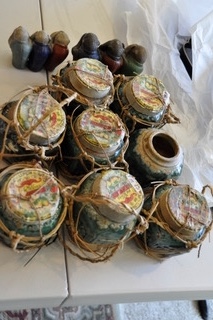
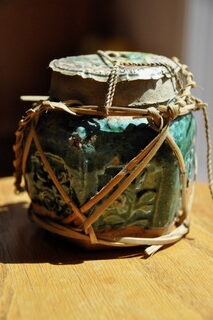
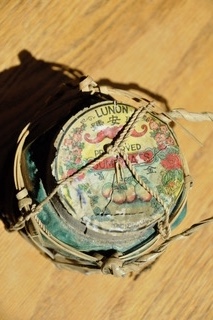
Myron wrote that most of the intact jars come from the Bow Yuen store, a business owned by the Lee side of his family. The Portland, Oregon store was owned by Lee Hong and operated between the 1880s and 1930s. Based on Myron’s research of the Lunon company and the history of his family’s store, his jars likely date to the 1930s.
A replica of a section of the Bow Yuen store and real objects from the original business are on permanent display at the Portland Chinatown Museum.
Back to the term “ginger jar”: it seems clear that we should probably stop calling Chinese stoneware vessels by what foods they might have held. This is a lesson that former research assistant George Matthes noted in a blog post on Chinese stoneware jars that we now call “spouted jars,” but used to be referred to by archaeologists as “soy pots”: https://buriedchinatowns.sites.grinnell.edu/evanston-chinatown/soy-pot-spouted-jar-or-nga-hu/
Chinese stonewares are some of the most common types of artifacts found at Chinese diaspora sites, which makes new discoveries on this ceramic waretype very exciting.

Leave a Reply