

Hi everyone, Alice again. I’m here to update you all on our first week excavating the Chinatown in Rock Springs, Wyoming.
On the morning of June 13th, we departed from the Grinnell College Humanities and Social Sciences Center promptly at 9:00 AM. We made several stops to fill up on gas and snacks on the way to the first Quality Inn in North Platte, Nebraska. The next day, we drove for a few more hours before finally arriving in the afternoon at the Quality Inn in Rock Springs, Wyoming. The drive was quite scenic after we entered Wyoming.
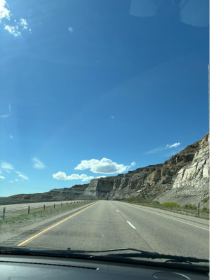
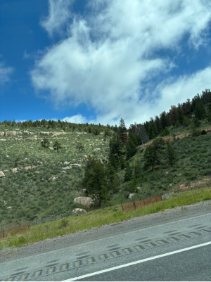
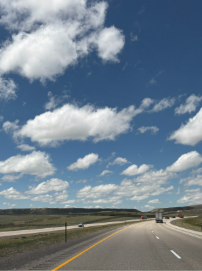
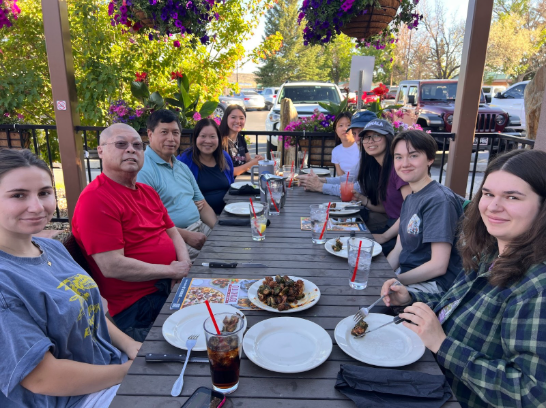
Once everyone had settled in, we all had dinner at the Old Chicago Pizza across the street and met the first descendants of the Rock Springs Chinatown residents that volunteered to help at the site: Ricky Leo and his wife, Grace Leo, and Jeff Yee Litt. Another volunteer, Lian Lew, is not a direct descendant of a 19th century Rock Springs Chinatown resident, but her grandfather co-owned the popular Sands Cafe in Rock Springs.
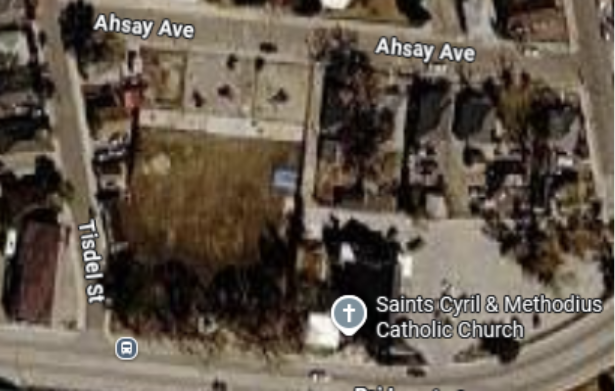
The excavation site of the former Rock Springs Chinatown is in a playground area between Slovenski Dom, owned by John Partain, and the Saints Cyril and Methodius Catholic Church. The playground is where the Washington School once stood.
The first morning at the site was cold, we even had the heat on in the car. We began by doing formal introductions and met Dr. Dudley Gardner, a professor emeritus of history and archaeology at the Western Wyoming Community College who has been researching the Rock Springs Chinatown for 40+ years. We also met additional descendants, Todd Kaneko and his son Leo, as well as Kori Brown and her daughter Lyra. Todd’s mother, Cheryll Leo-Gwin, and her StoryBoards Northwest crew—Arlene Naganawa and Gavin Reub—also joined us to film a part of the excavation. Volunteer archaeologists included Paul Hoornbeek and Lian Lew who worked at the site last summer. After introductions and liability waivers were signed, we removed tools from the van and the shed to move them closer to our work spaces.
On the first day, we primarily screened contents from auger holes to determine our next excavation area. I learned how to distinguish between field specimens (inorganic material like Chinese brown-glazed stoneware and glass) and ancillary specimens (organic material like animal bone and wood) that might be sent for analysis. I also learned how to do paperwork pertaining to the site as Amber and I focused on was opening a new unit called 6N 2W that expands the 2025 excavations. The units of the excavation are oriented relative to north, which is why the provenience has “6N” in it—as the units go further north, the number would increase. For example, the unit north of 6N 2W would be 7N 2W. We were opening this specific unit, 6N 2W, to excavate the large tin can that was already slightly exposed and excavate it properly.
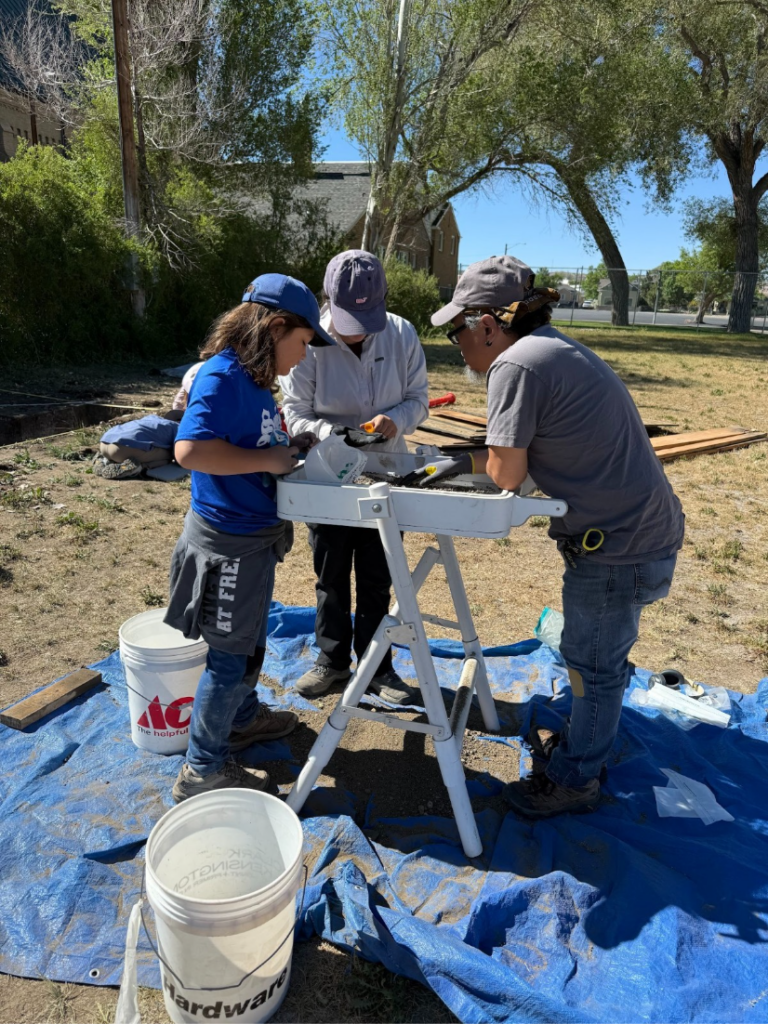
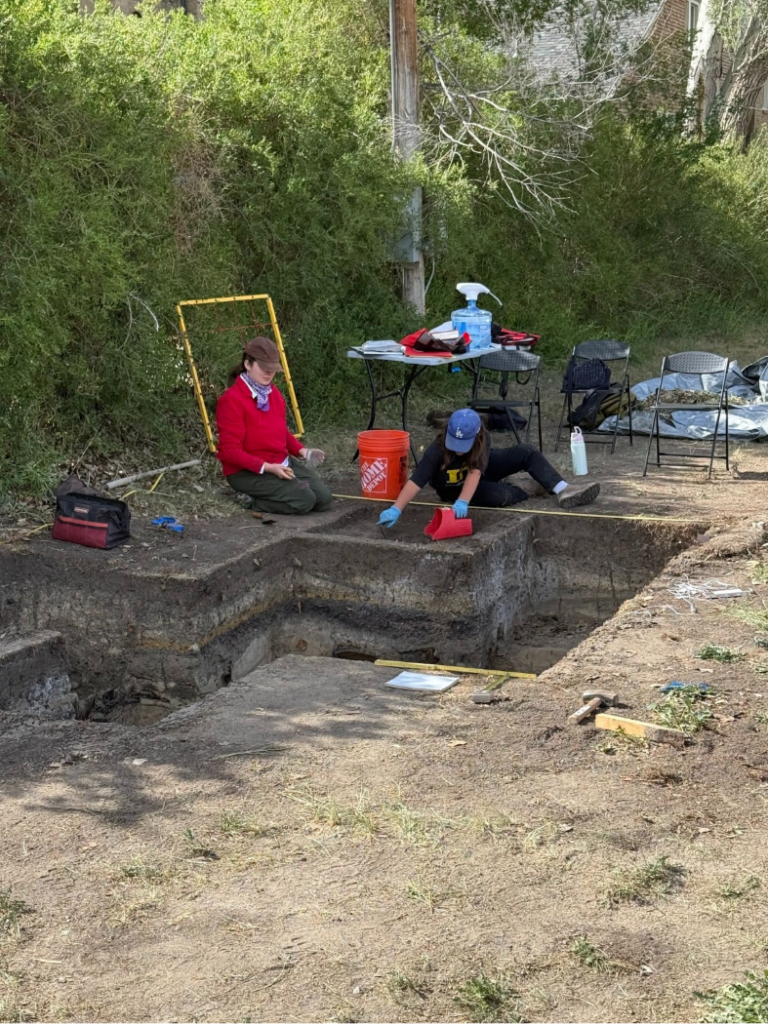
On the second day, we began excavating Stratum A of our new unit 6N 2W. After being guided through taking measurements and elevations, I also had to refresh on using the Munsell soil color system and how to describe the color, angularity, texture, and disturbances in the soil. I learned how to properly use a trowel and a bricklayer’s pick (my favorite tool so far) to get through the upper sod layer. Surprisingly, we began finding Chinese brown-glazed sherds in this layer.
Arlene, Cheryll, and Gavin interviewed me about my previous blog post about blue-on-white Asian porcelains and asked very meaningful questions that made me fully realize how tragic the Rock Springs Chinatown massacre was. According to a historical document from the U.S. Office of the Historian, the youngest victim, Choo Bah Quot, was only 23 years old at the time of his death. He was only 3 years older than I am now.
Later in the day, I was mostly sifting through artifacts in the sun. I unfortunately learned the importance of proper UV protection and sunscreen the hard way, as I got a bright red sunburn on my lower back.
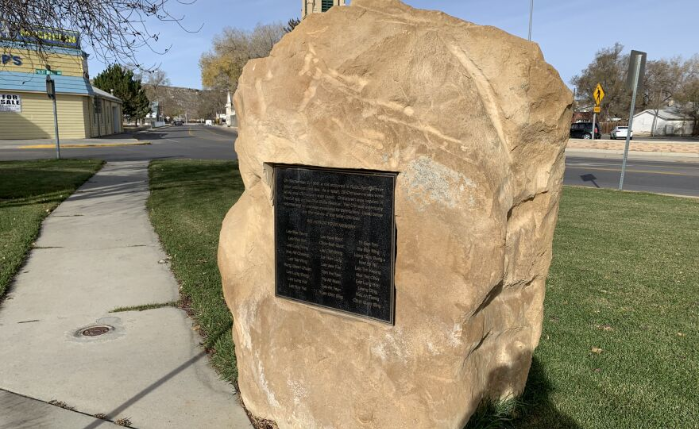
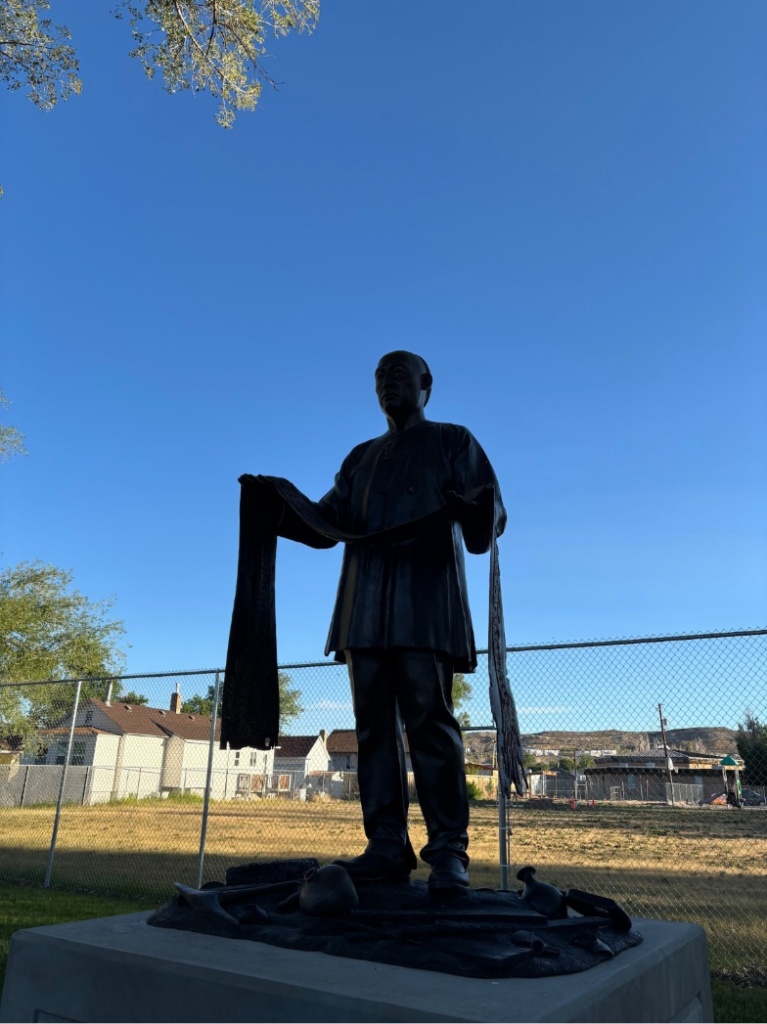
After we cleaned up and were on the way back to the hotel, Professor Ng pointed out the old memorial to the Chinese Massacre, which was quite different from the newer one of a Chinese man modeled after Ricky Leo. It was a large rock with a metal plaque that could not be seen too well from a distance, and a dog poop bag station and trash can was situated in near proximity. I am not sure how I feel about the circumstances of the old memorial.
On the third day, Amber and I finalized excavating Stratum A. Stratum B was not too different, other than being slightly lighter in color. As the upper layers are more recent relative to today, nothing of note was found except for an occasional plastic straw and other pieces of recent garbage. Going slightly deeper, we also came across some material from the demolition of the Washington School such as concrete and a couple fragments of what we think is white asbestos cloth. With the cloth, we took precautions such as wearing masks to prevent inhalation of airborne particles and having Paul properly handle and dispose of it.
On the fourth day, we were finishing up Stratum B and starting Stratum C. Stratum C was quite tricky as it had a lot of gravel. However, I would not consider the most difficult part of getting through Stratum C to be digging in the middle. It was most definitely the part where we had to straighten the walls because the small rocks would get in the way of the straight-edge trowel, or there would be a big rock embedded in the wall that was just there to mess everything up. Since we avoid disturbing the walls too much, sometimes we just have to smooth around the rock.
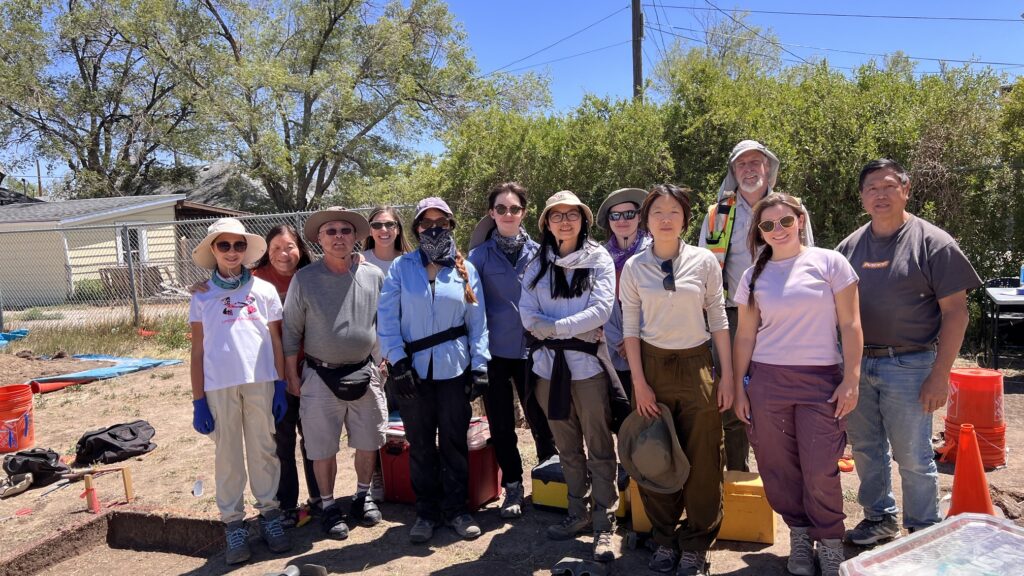
L-R: Lyra B., Grace L., Jeff Y.L., Kori B., Lian L., Jenna M., Laura N., Amber R., Alice Y., Paul H., Emily G., Ricky L.
On the fifth day, Michael Luo, a journalist and executive editor of The New Yorker, came to visit and volunteer with his daughter Maddie. Michael wrote a chapter on the 1885 Rock Springs Chinese massacre in his award-winning book Strangers in the Land: Exclusion, Belonging, and the Epic Story of the Chinese in America, which we read before the excavation.
Amber and I finished digging through the beginning of Stratum C and after consulting with Professor Ng, we determined that the thin orange layer right below would be a subset of Stratum C and called C Prime because it was not consistent in the level.
After finishing up for the day, Ricky and Grace graciously invited everyone to their house to try their famous chili meat. Now, other than the ground beef, this was not regular chili that you are probably thinking of; this specific dish is a blend of Chinese and Mexican roots that was born at the New Grand Cafe on 117 K Street, according to reporter Katie Glennemeier (2018). The creator of the dish was a Chinese woman named Dolly, and she made it to “fit the tastes of the Mexican workers at the restaurant.” Other than the ground beef, it also has tomatoes, bell peppers, hot chili peppers, and onion. It tasted quite similar to the dishes my parents cook at home, so it was comforting. Also, I was not expecting Grace and Ricky to also prepare shrimp dumplings, soup, egg rolls, salad, ribs, and fried rice on top of their chili meat. The food was delicious and, as a Chinese person, I think it was a great way to let everyone get a taste of Chinese cuisine. Thanks Ricky and Grace!
On the sixth day, we finished excavating Stratum C Prime. It rained a bit for the first time at the site since coming here, so we waited for a few minutes for the rain to subside. We began excavating Stratum D and found a lot of clinker (pebble-like remains after burning coal)—it was easier to dig through, but crumbled very easily, which threatened to spill into nearby units and we did not want to contaminate other areas with clinker.
We ended the day early at 11 AM to return to the hotel and prepare for a trip to Evanston.
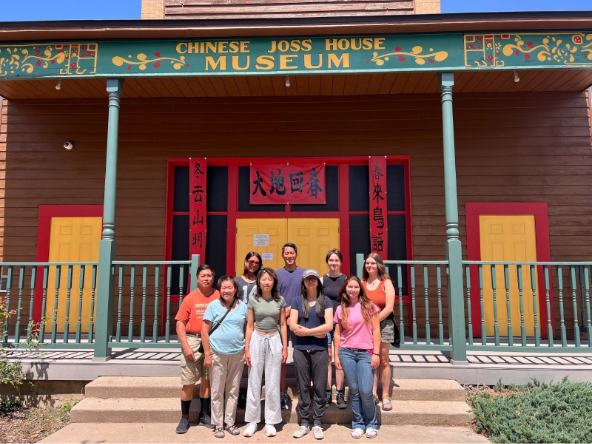
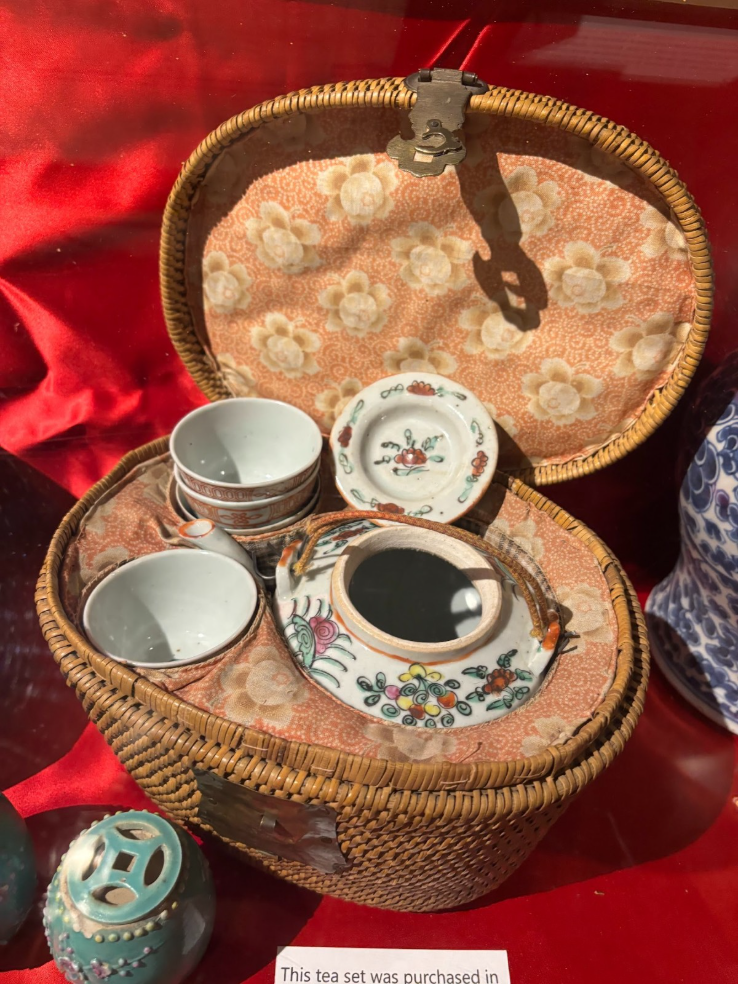
First, we visited the Joss House Museum, a replica of the Chinese temple in Evanston. It had exhibits for notable Chinese American individuals like Ah Yuen, who was called “China Mary” by locals, and Lock Chong Choong, who was also known as “Mormon Charlie.” There were also displays of tablewares and other items of cultural significance. I was excited to finally see a Chinese teapot warmer up close in person.
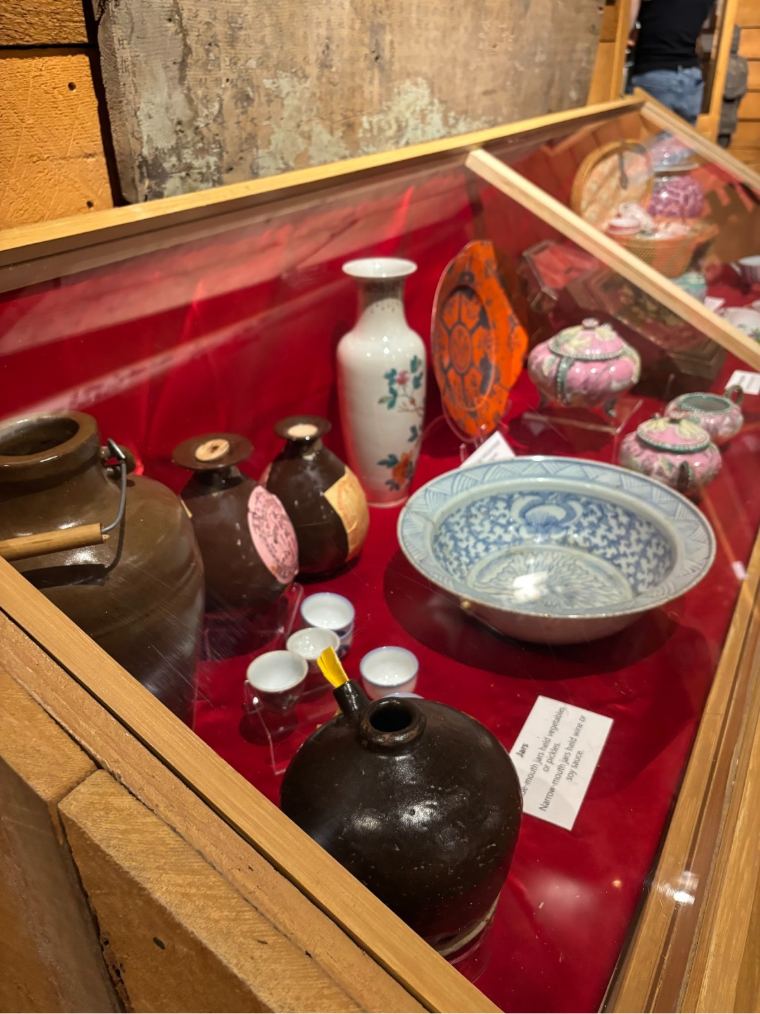
After seeing the Joss House, we went for a short walk through the Evanston Chinatown archaeological site and walked on China Mary Road. It was just a small road with some small houses and water flowing by. With the slight breeze blowing the tall grasses, this place was quite serene.
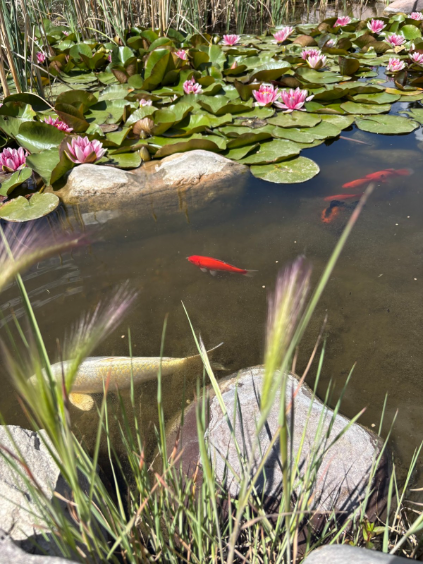
We also went to briefly tour the Uinta County Museum where we purchased some food for the koi in the pond behind the Joss House Museum. Shockingly, the fish did not seem to be in a rush when the food was thrown into the pond. It is safe to assume that they are very well fed.
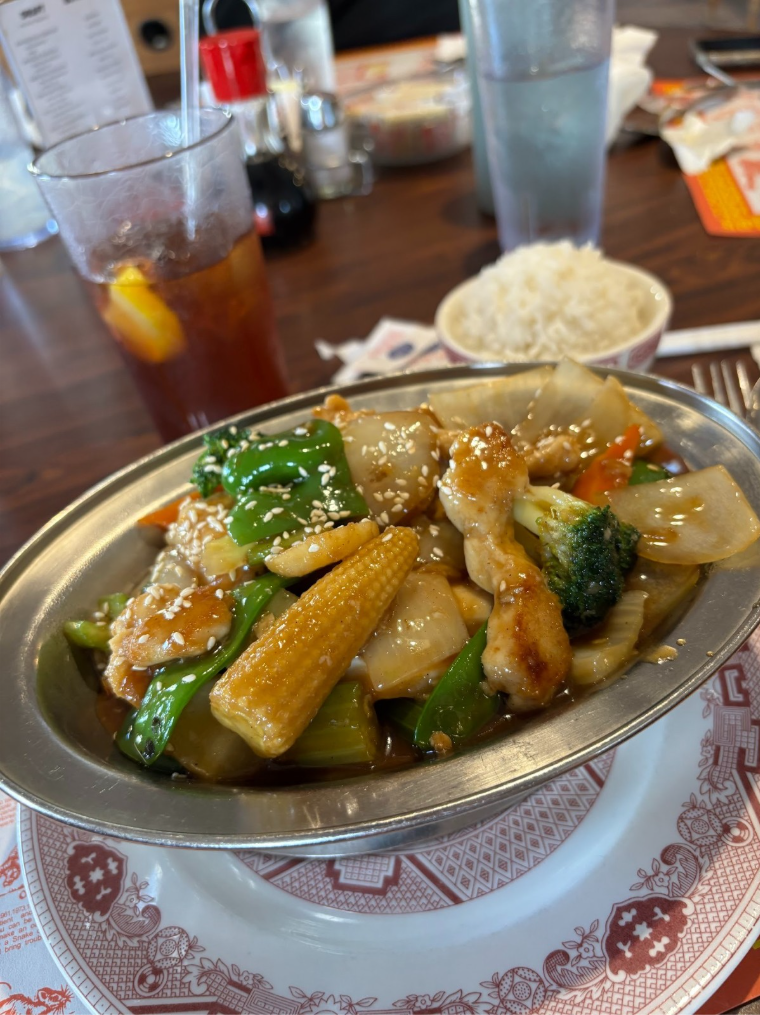
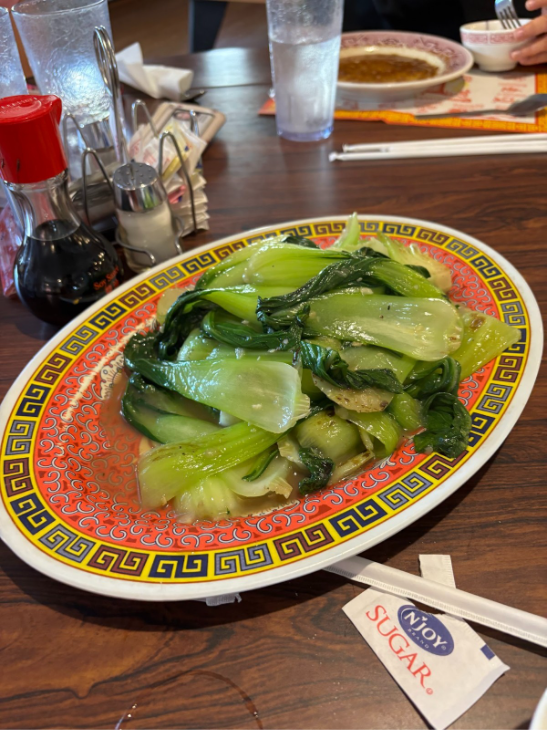
We said our goodbyes to Michael, Maddie, Ricky, Grace and parted ways. On our way back to the hotel, we stopped by China Garden for dinner, a Chinese-owned restaurant in Green River. There, Professor Ng conversed with the owner Sui “Susi” Leo and her relatives also working there in the Taishan dialect. She ordered a plate of bok choy as well, and I was surprised with how fresh it was, given that we were in a part of Wyoming with no Asian markets nearby.
We drove back to the hotel after dinner and concluded our first week in Rock Springs. Many more exciting things to come from the dig!
Funding Acknowledgment
Thank you to all of the project funders and donors for making the 2026 field season possible.


Leave a Reply