

Hello all! Amber here! In this post, I will be giving the highlights along with the progress made this week in excavating unit 6N 2W, which is a continuation of the 2025 excavations. Fair warning, there are a lot of pictures containing butchered animal bones found this week, in case that’s something you’d rather not see.
Monday, June 22nd
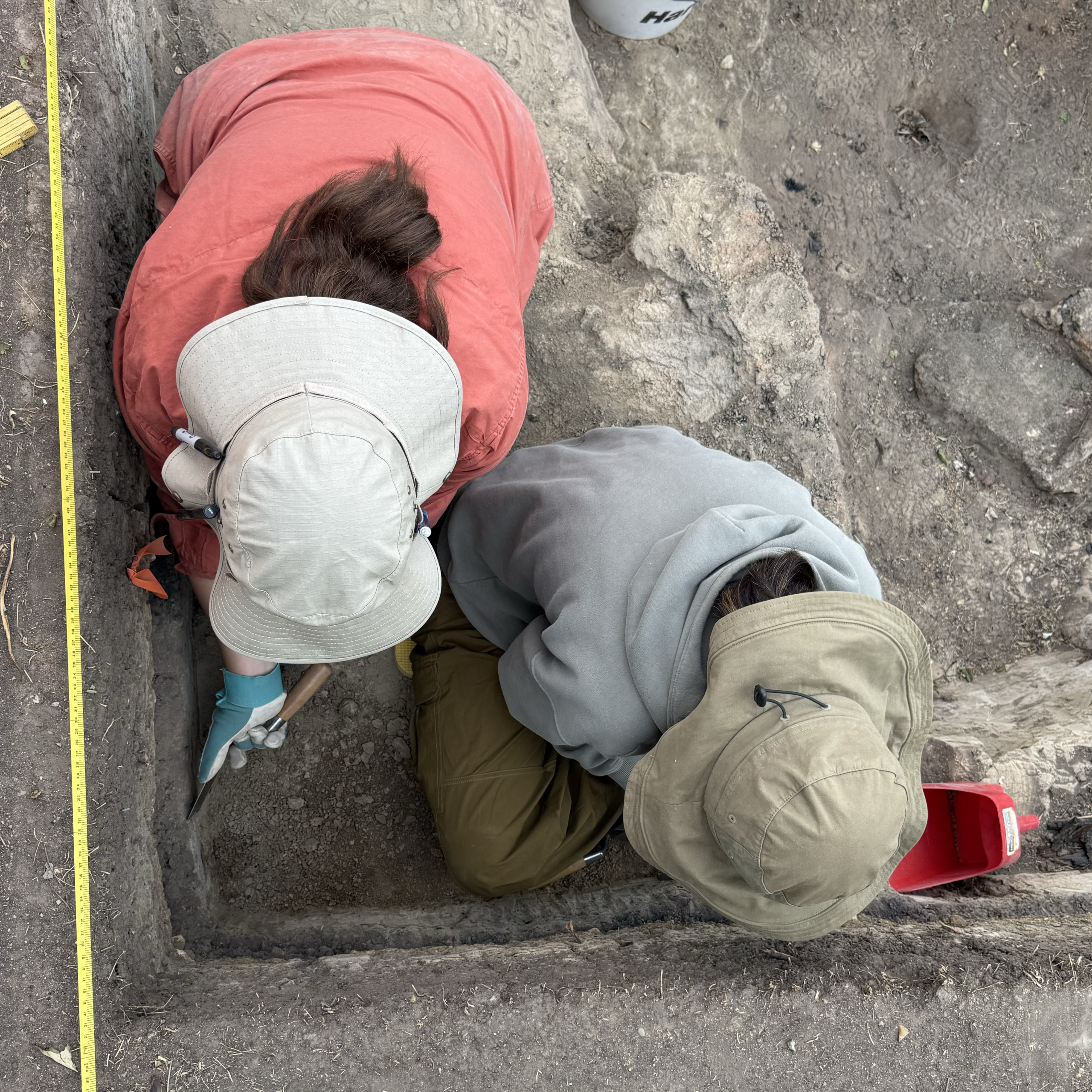
Today, our crew: Professor Laura Ng, Paul Hoornbeek, Dr. Dudley Gardner, Lian Lew, Alice Yan, Emily Gonzalez, Jenna Mack, and myself, resumed our activities from last week.
Picking up where we left off last week, Alice and I excavated and screened the clinker layer (Stratum D) of unit 6N 2W. In this layer, we mainly found melted glass along with a few unmelted shards.
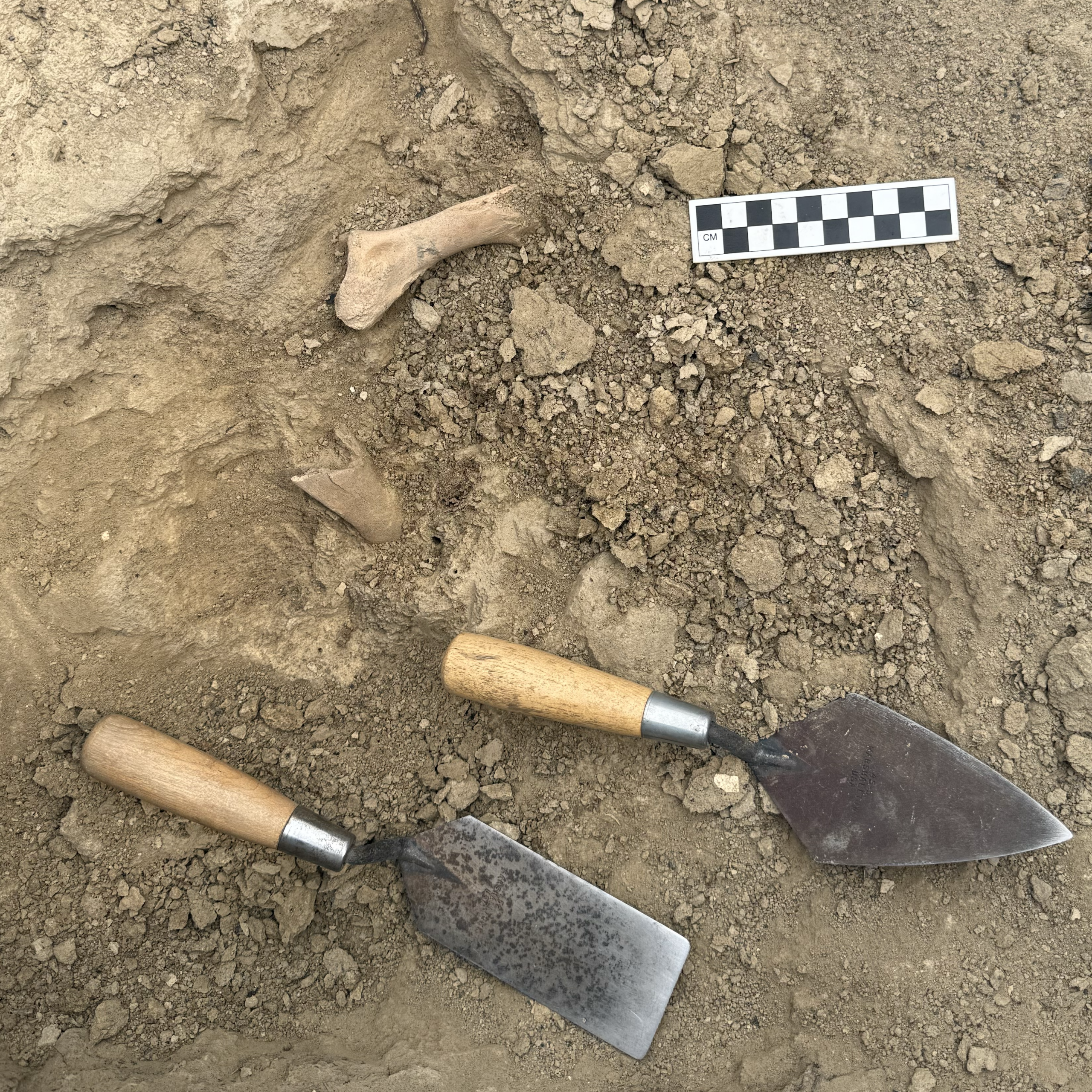
We then began excavating the next layer of soil, Stratum E, which felt more compact and contained flecks of charcoal. Some of the artifacts found today included: an olive-green glass push-up from the base of a bottle (below left), the base of a CBGS liquor bottle, a small copper disk, and some butchered animal bones (below right), probably from a pig.
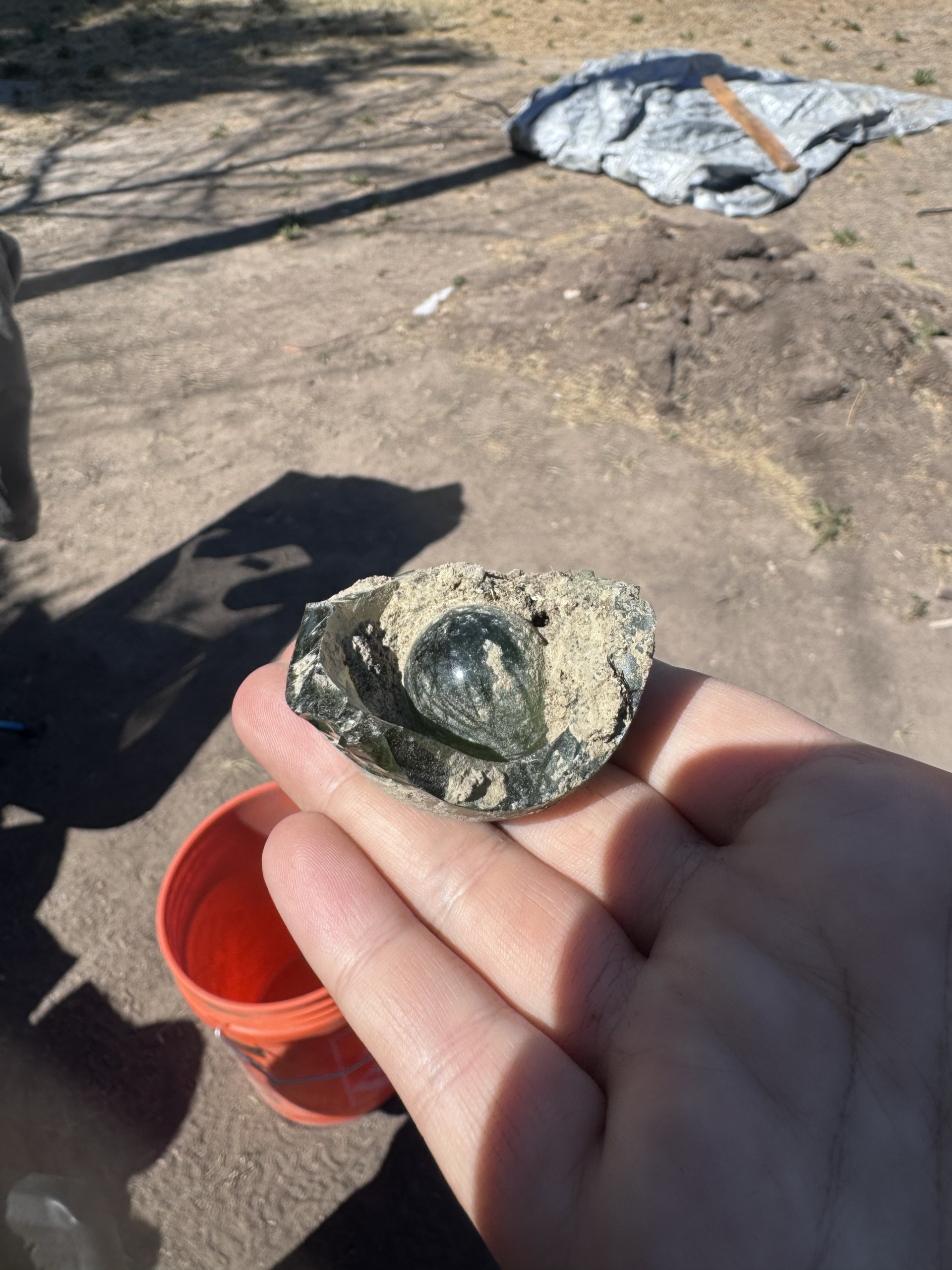
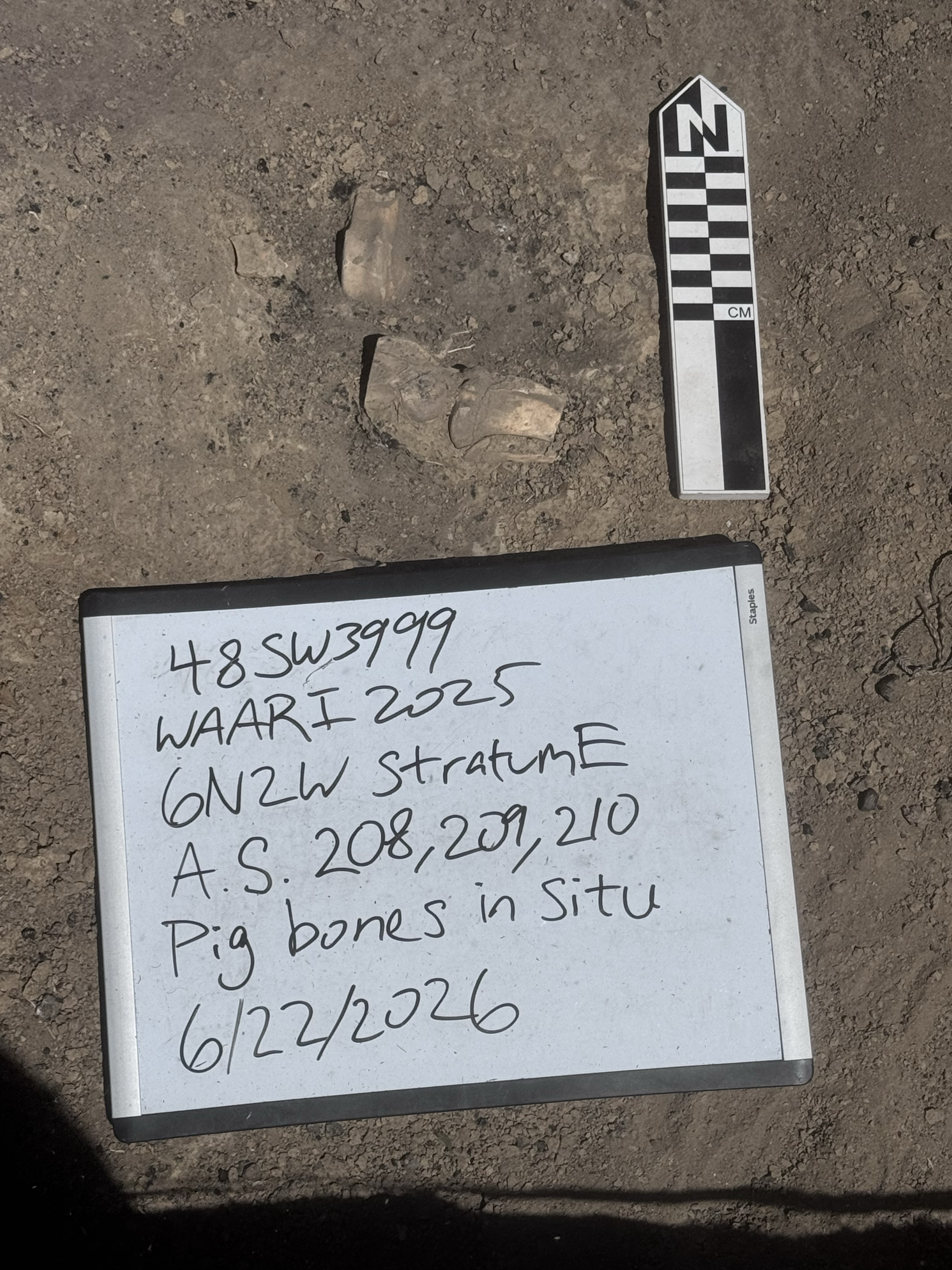
Later in the day, we were joined by John Partain, owner of the Slovenski Dom (Slovenian Hall) to our west, who has been “excavating” his basement, which contain artifacts from the Rock Springs Chinatown.
Tuesday, June 23rd
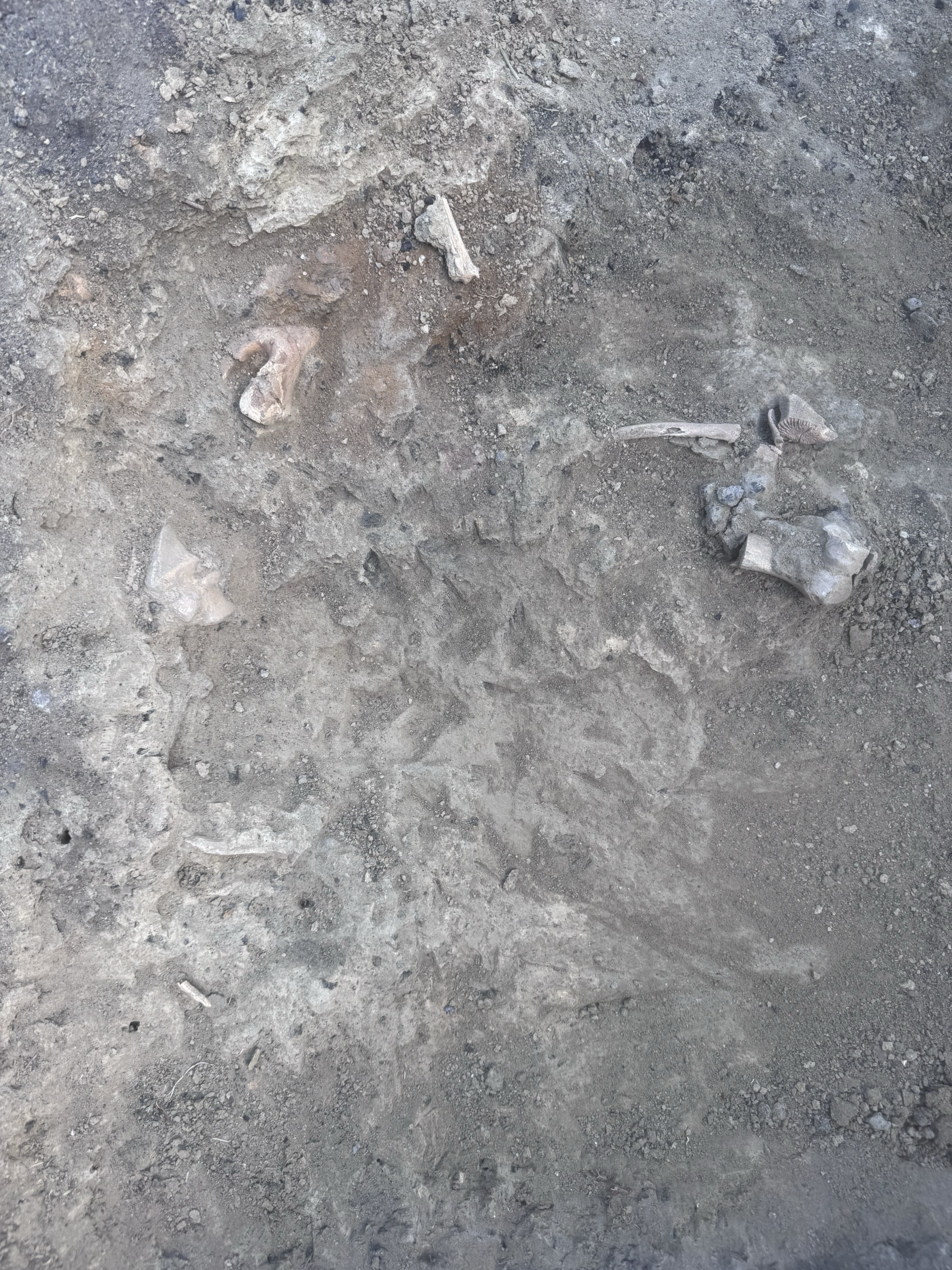
Today, Professor Ng, Alice, and I continued excavating in stratum E of the unit 6N 2W, while Jenna and Emily worked on the neighboring unit, 6N 3W (left photo). Near the bottom of this unit, they found a chicken skull (middle photo) and we continued to uncover more animal bones in unit 6N 2W (right photo).
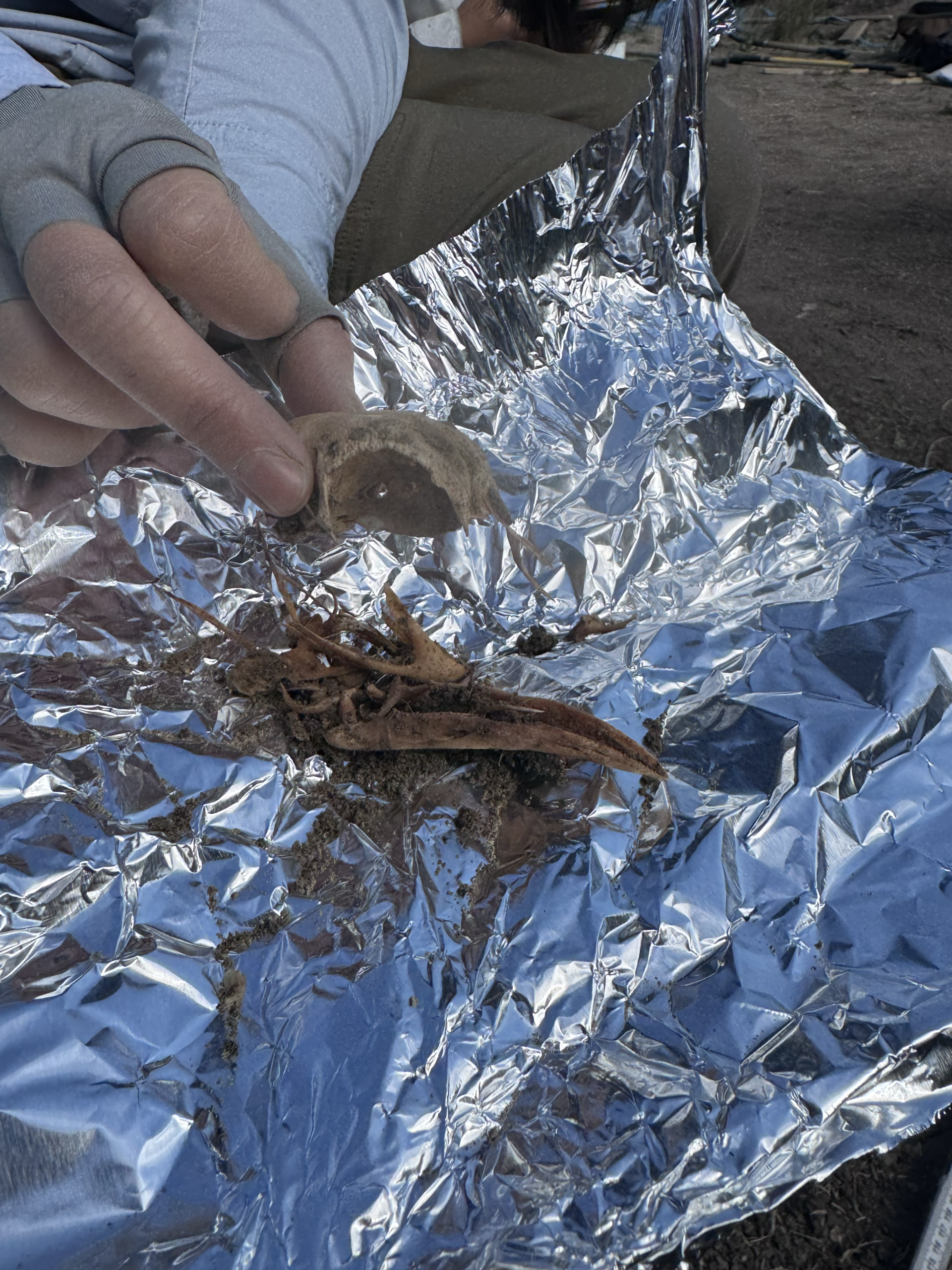
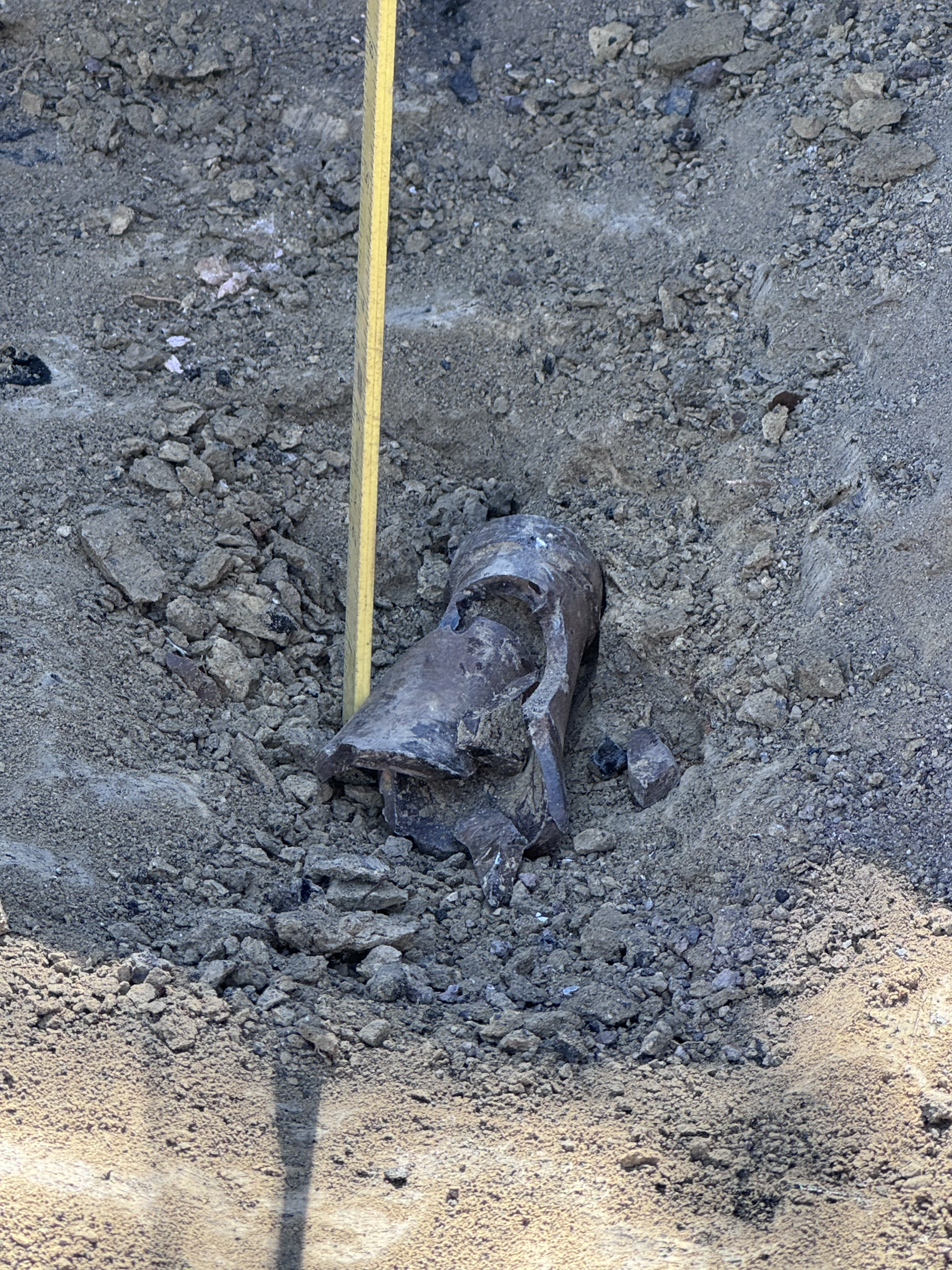
Beneath the bones pictured above, we uncovered a fragment of a Four Seasons patterned rice bowl base (left). In a different area of 6N 2W, we found the neck and finish of an amber-colored bottle (right). Interestingly, these are directly on top of burnt wooden lumber that the 2025 team calls the “Burn Layer.”

Other finds in this unit not pictured include: fish bone, flat metal, unglazed ceramics (possibly lids), CBGS, and olive glass (possibly from the same bottle as the push-up found the previous day).
Wednesday, June 24th
Today, we continued excavating Stratum E of 6N 2W. As we dug further down, we came upon even more animal bones! At first, we saw some medium-sized bones, which we assumed to be pig bones. We also found some fish bones. As we neared the bottom of this Stratum, we uncovered larger bones that could be from a cow or horse. Most of the bones were clustered in the southwest corner of the unit.
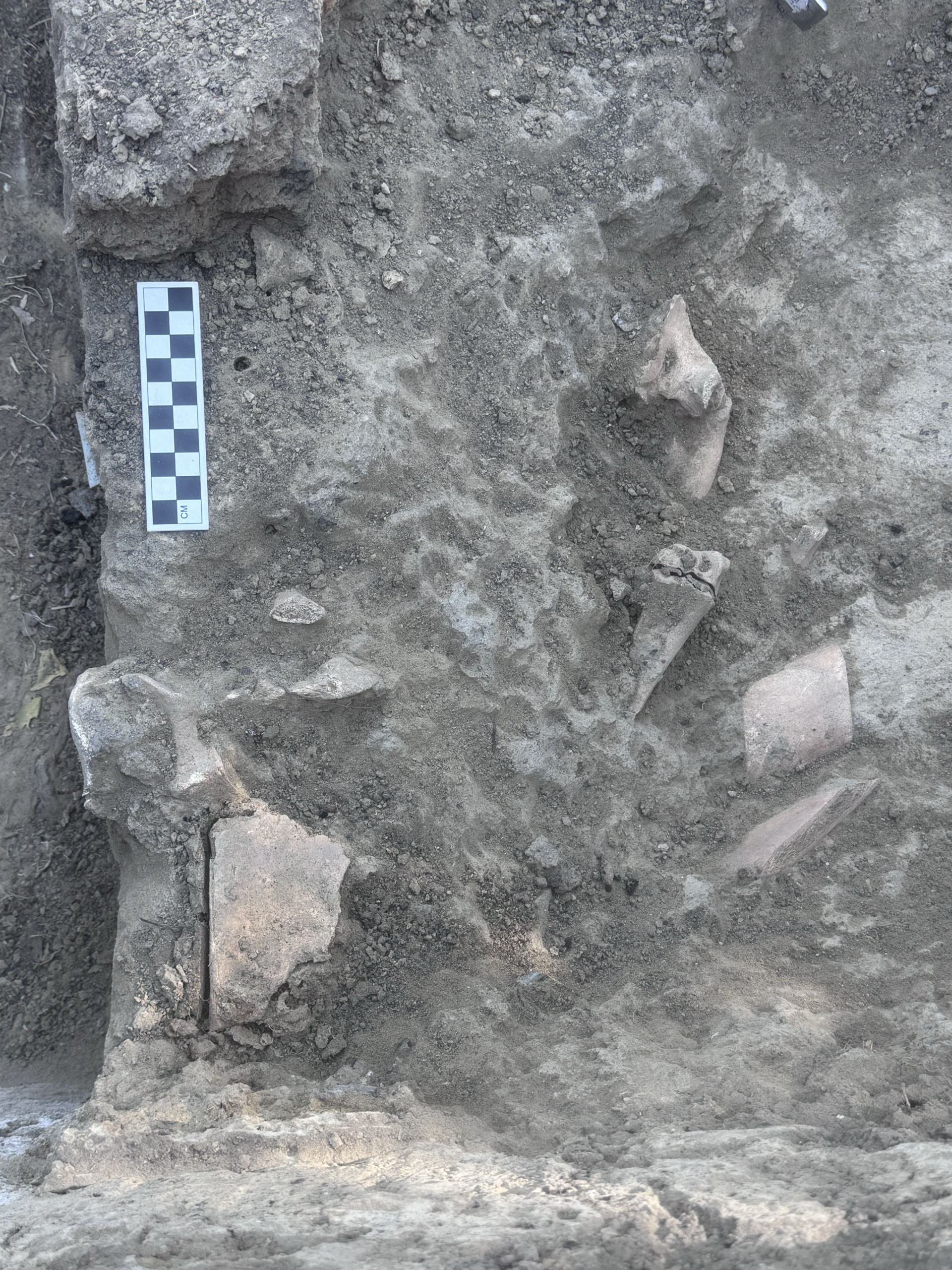

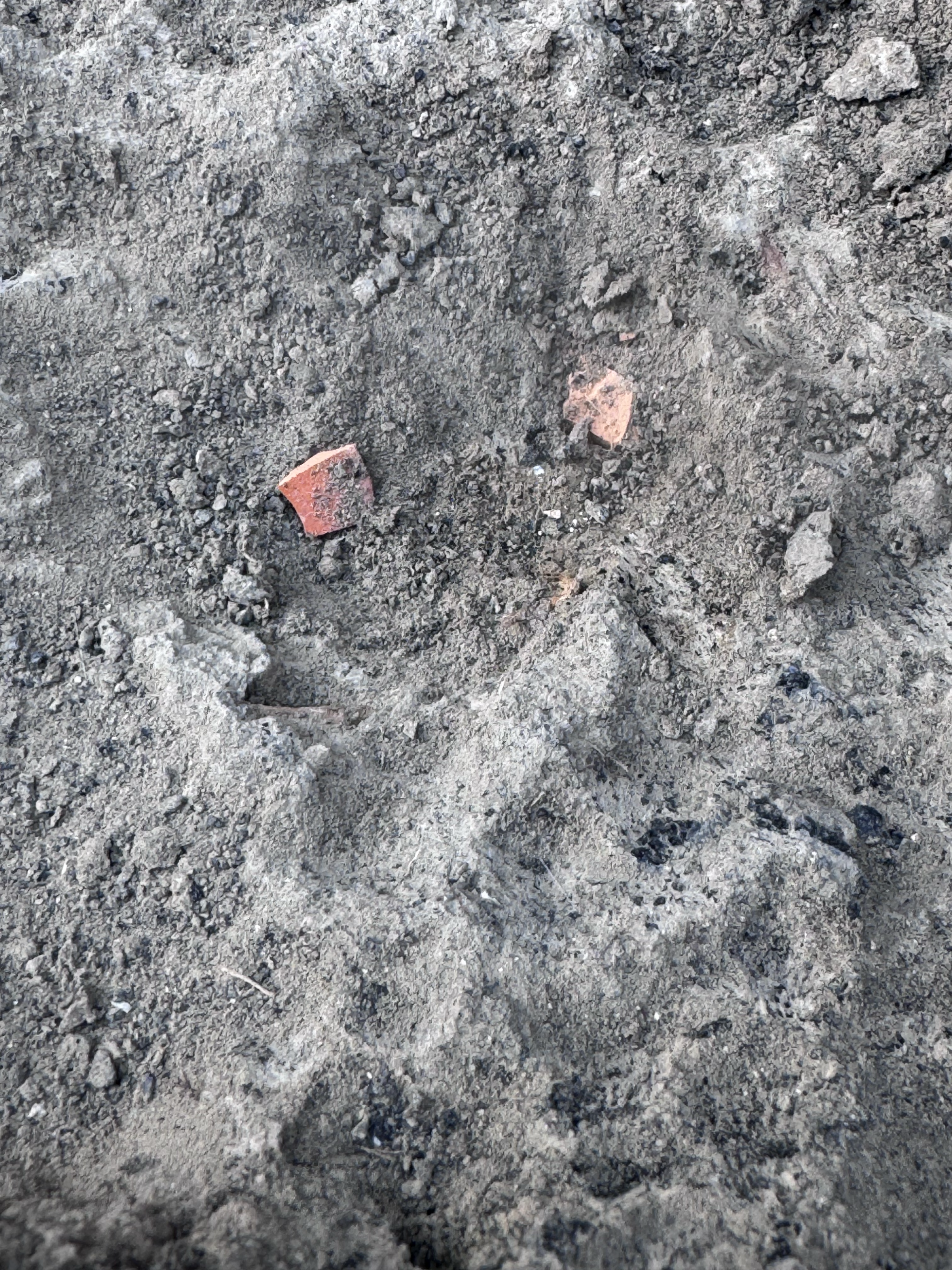
While excavating this stratigraphic layer, we also uncovered pieces of an orange opium pipe bowl (below left), and fragments of an eggshell kept together by the soil (below right). We also continued finding more pieces of olive green glass, Winter Green pattern ceramics, and CBGS near the animal bones.
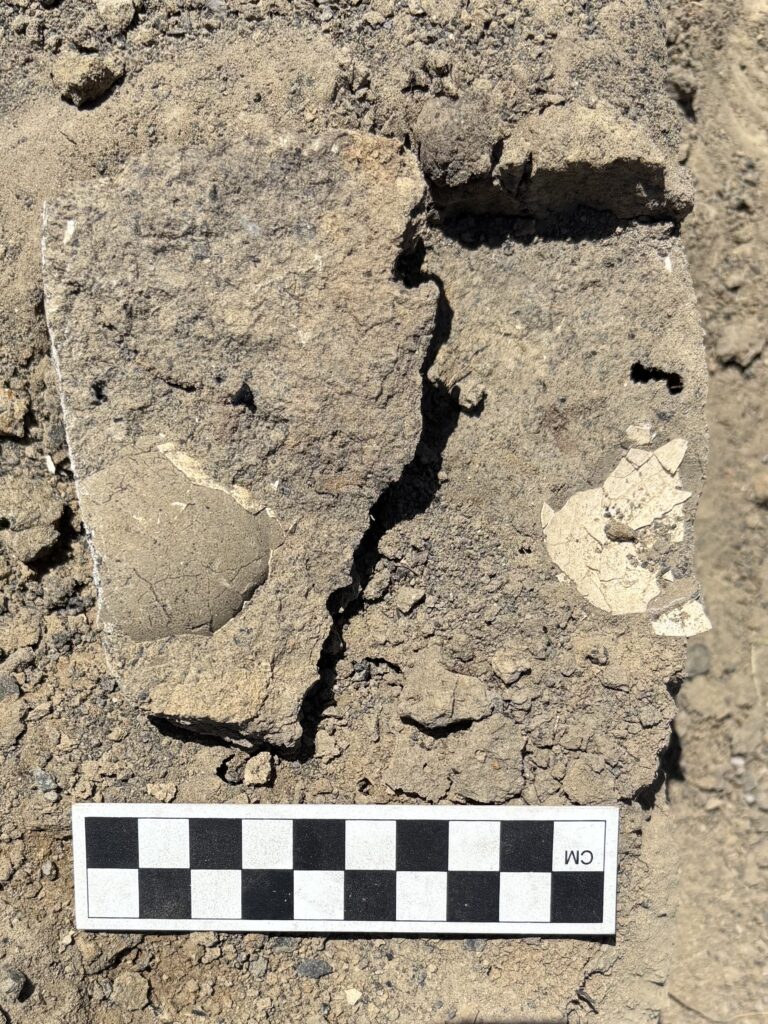
We hope to begin excavating Stratum F tomorrow as we are nearing the sterile soil layer. While working to clear the soil from the edges of the unit, more animal bones were found around the northern edge and in the southwest corner. Further excavation will be done tomorrow.
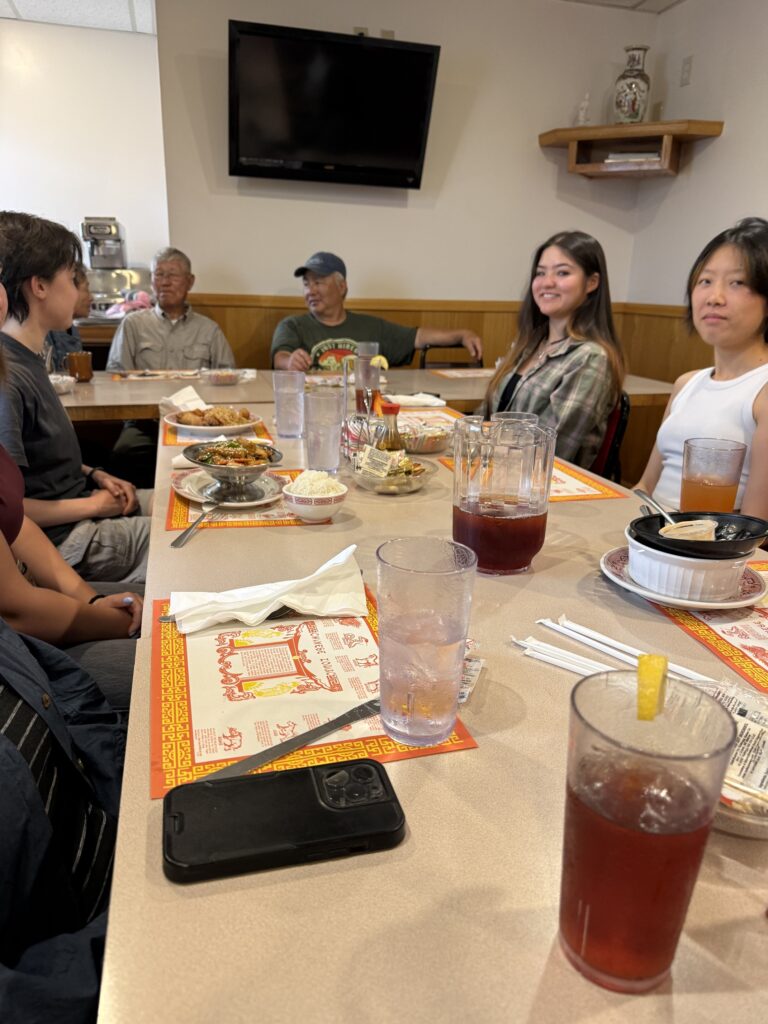
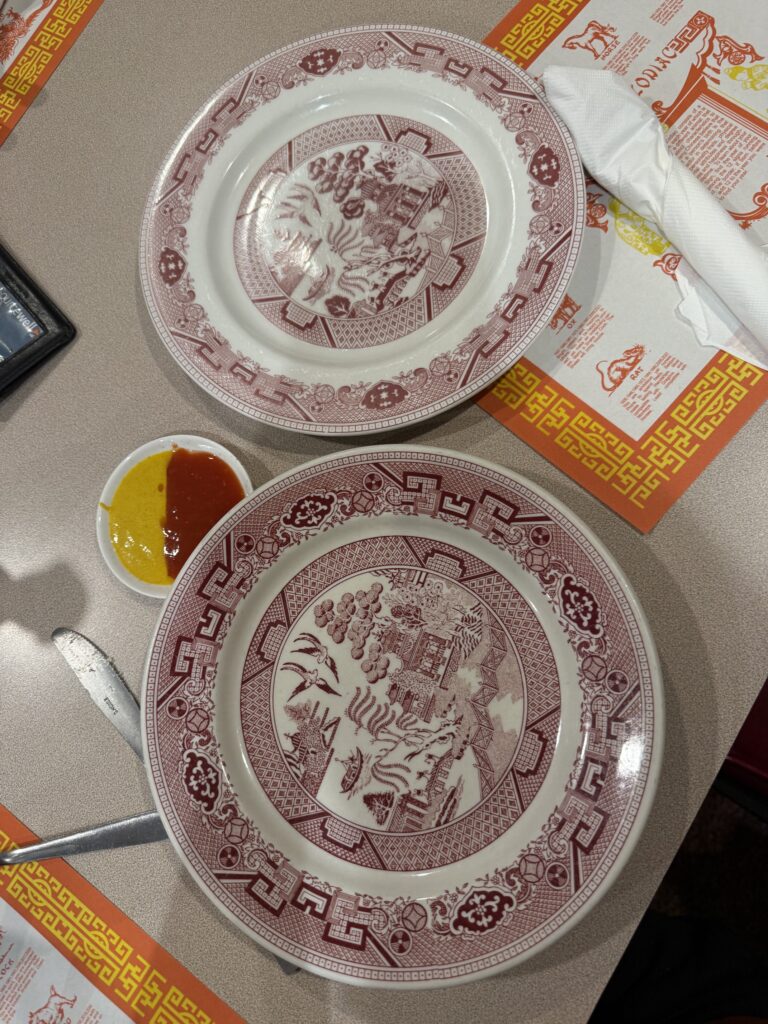
After the work day, we were treated to dinner at China Garden by Mark Leo, whose wife owns the restaurant. There, we met up with Mark’s brother Edmund, Lian, and Lian’s grandparents. The older generation told stories about their relatives in Rock Springs and recalled their experiences in the restaurant industry, such as the names of popular American and Chinese foods on their menu as well as the types Chinese serving dishes they used.
Thursday, June 25th
No updates for today. It rained last night, making the conditions for excavation unfavorable. ☹
Friday, June 26th

With the rain having stopped today, we were able to continue our excavation!
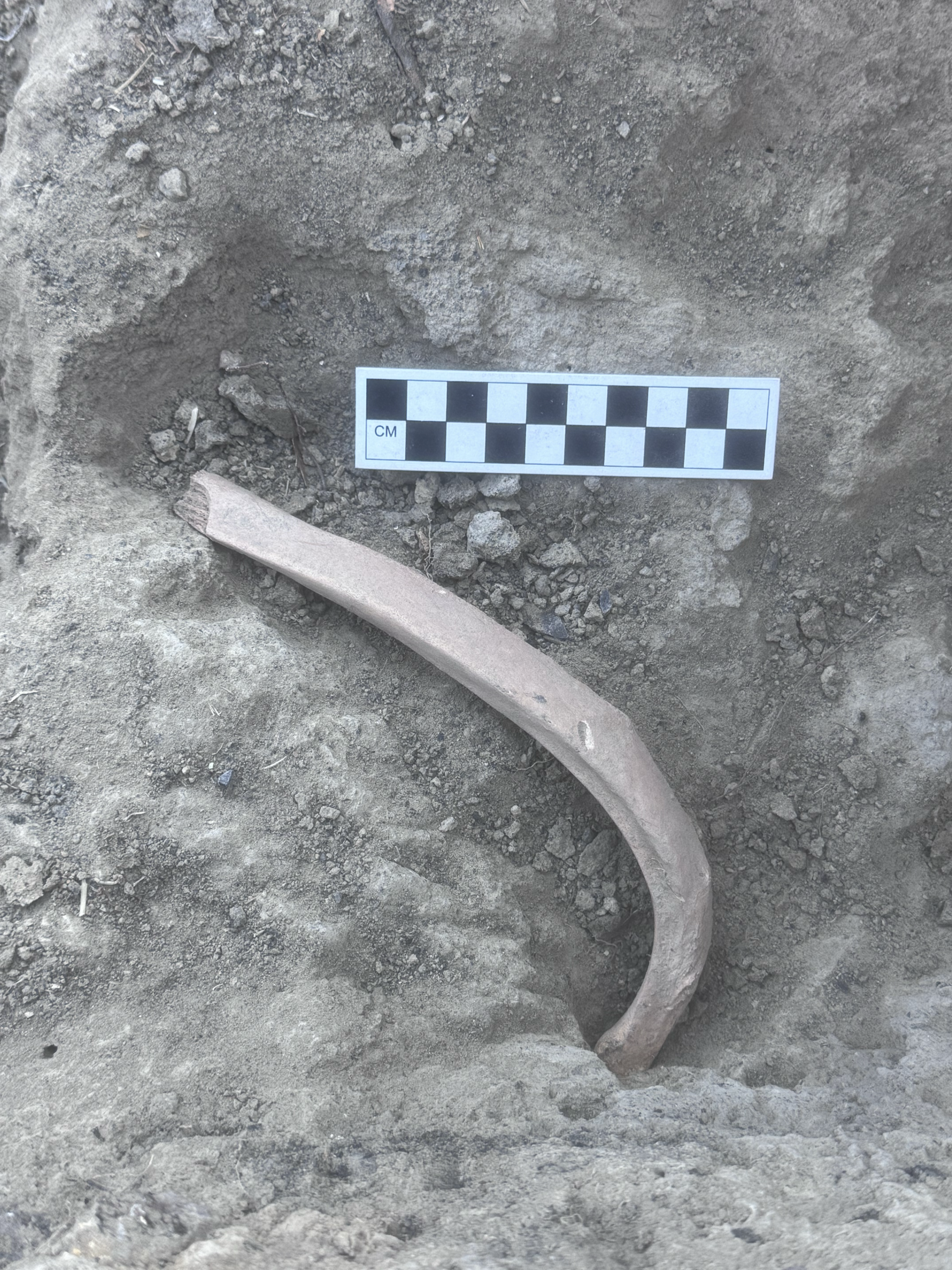
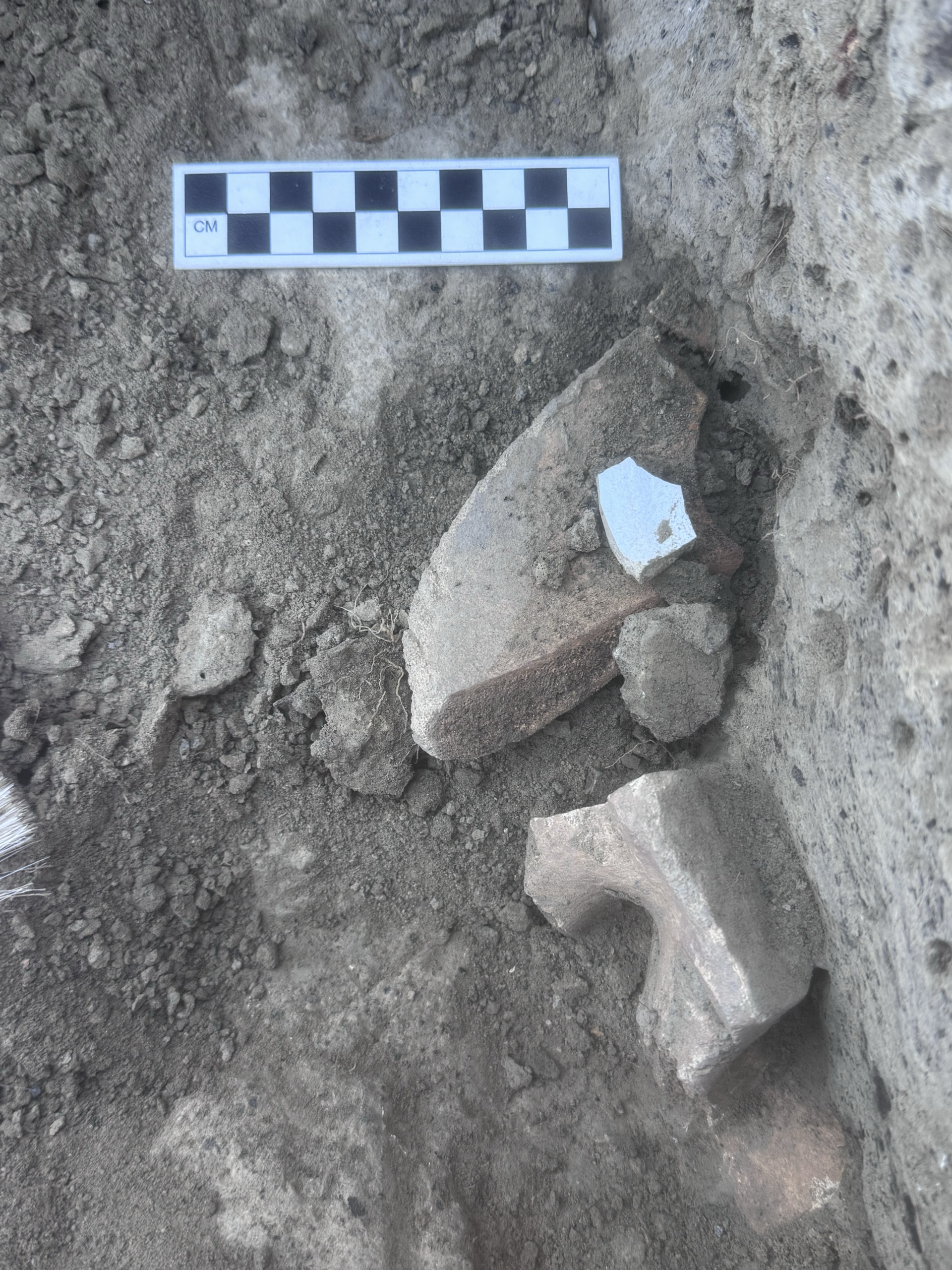
Unsurprisingly, we found more butchered animal bone in the southwest corner of the unit. We also found a piece of whiteware atop one of the bones.
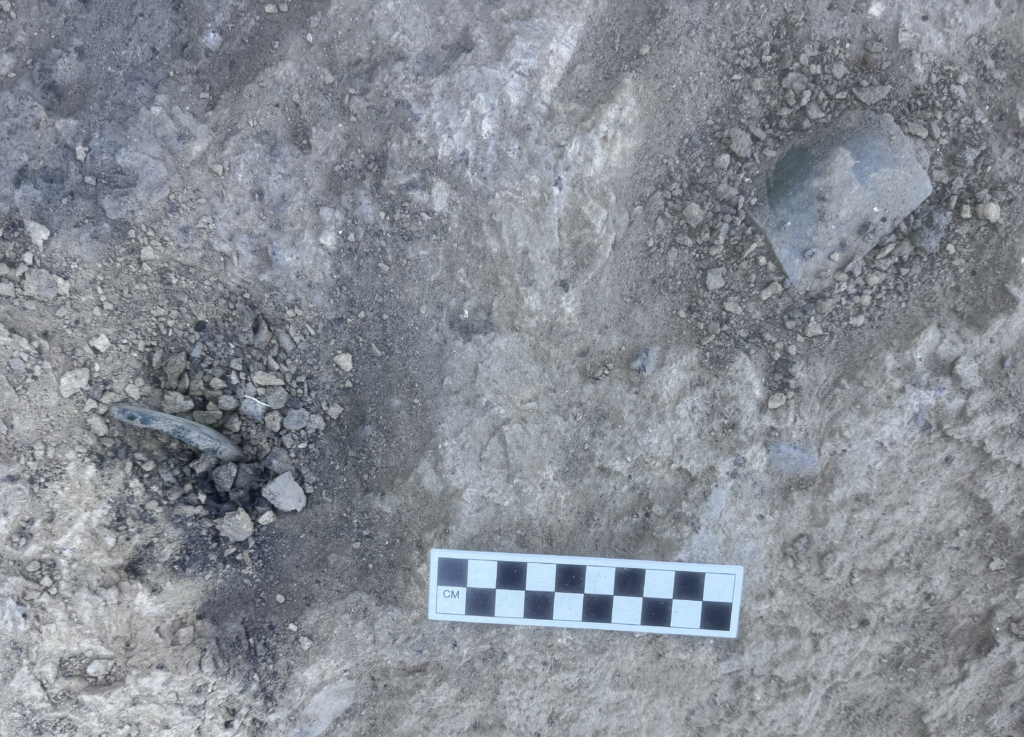
We also found more shards of the olive-green bottle further north in the unit.
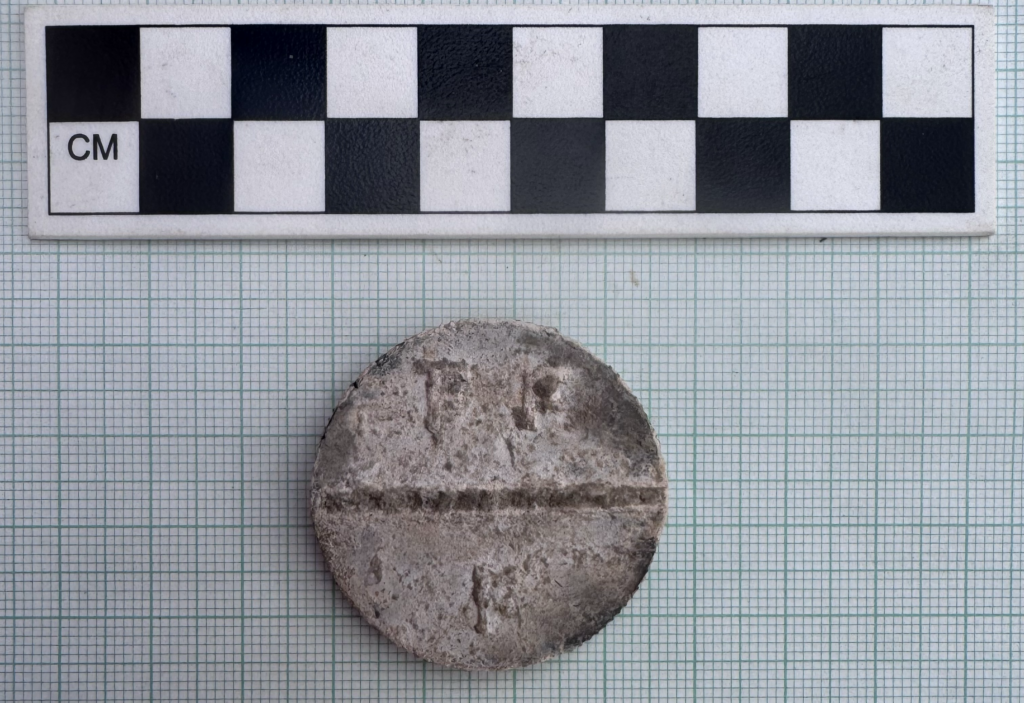
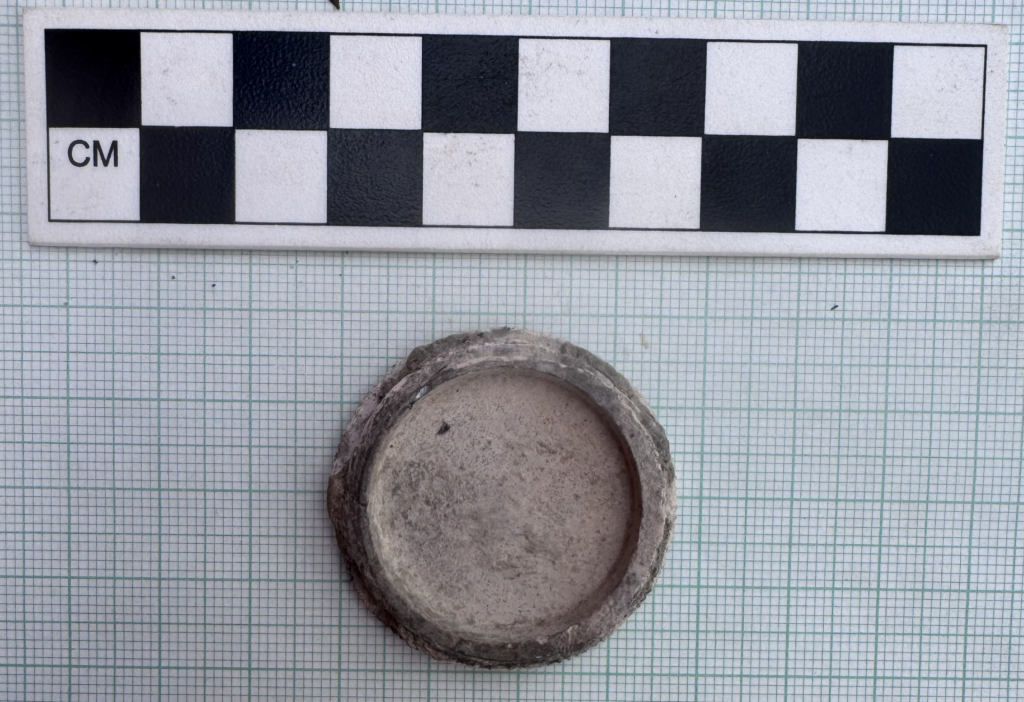
An interesting find we came across in the northeast corner of the unit was this lead cap. It measures about 4 cm in diameter, has knurling around the edge, a straight groove on top, and, to me, what appears to be the letter “F” embossed three times across the top.
We were unable to reach the next stratum today due to the amount of pedestaling needed (and the time it takes) to carefully extract the artifacts (mainly butchered animal bone) uncovered today.
Saturday, June 27th
While continuing to dig the rest of Stratum E out of the southwest corner, we yet again came upon more butchered animal bone, though it appears we have finally reached the end of what I’ve been calling “the bone pit.”
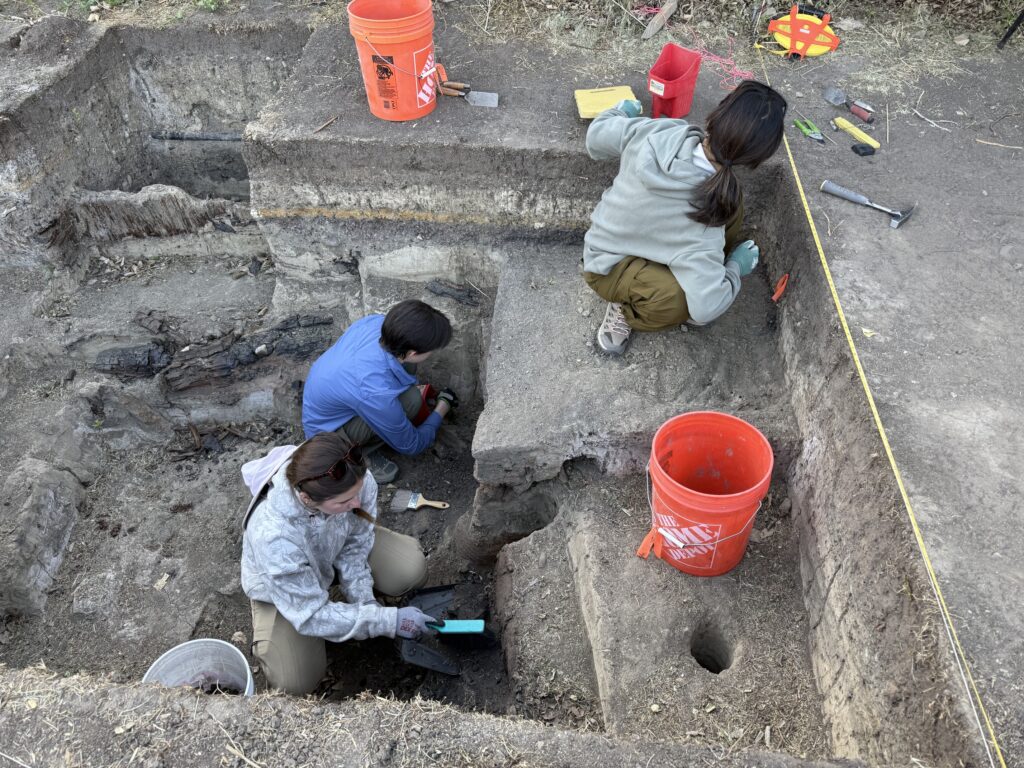
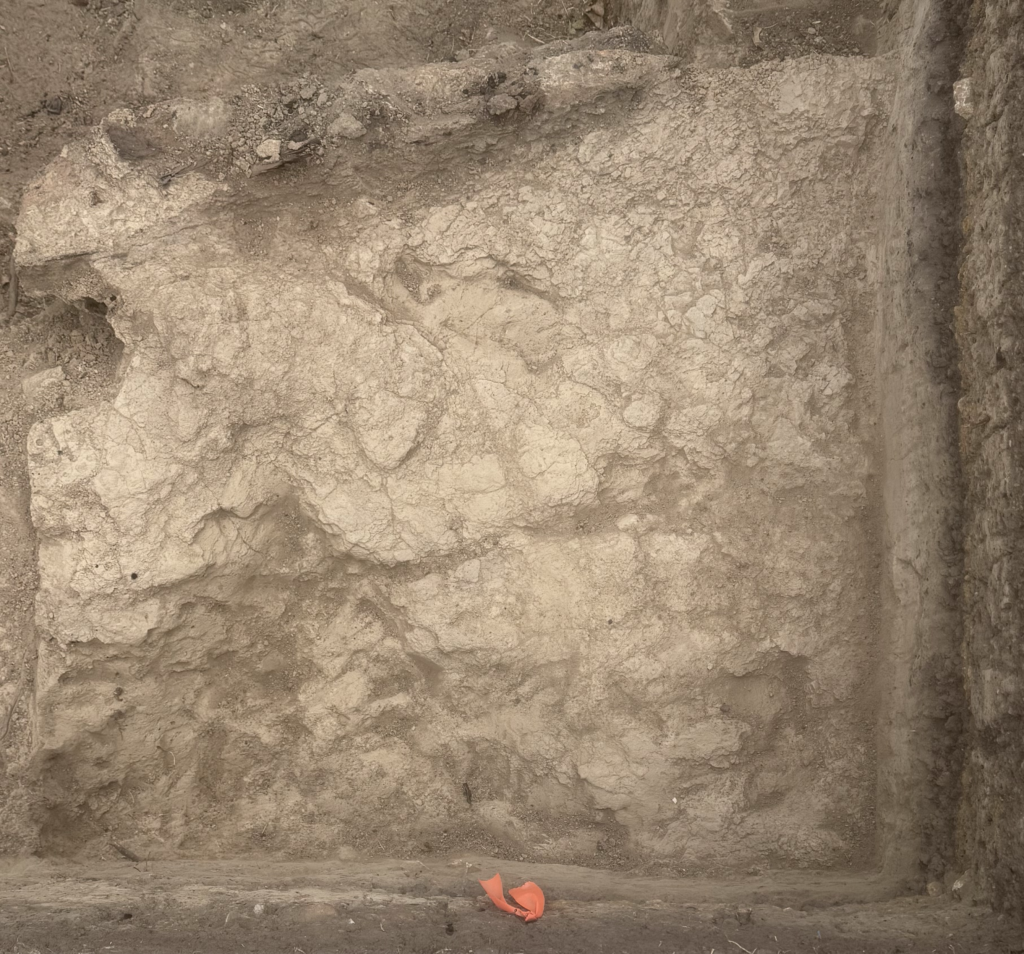
The pictures below show the progress we have made in excavating this unit. The image below on the left was taken at the end of our day on Monday and shows the beginning of Stratum E. The image below on the right shows the end of Stratum E and the beginning of Stratum F. The dark band on the northern side of the unit is from a burned wooden beam, which will be recorded as an archaeological feature within Stratum F. The soil south of the feature is sterile clay. When examining the side profile of the unit from the north side, it appeared that sterile clay was dug out by the house’s inhabitants, and a soil similar to that of Stratum E was used to fill the space under where the beam lies. Because of this, we consider the wooden beam and any soil underneath it (not visible in these pictures) to be from the same time chronologically, and therefore, all part of Stratum F. The hole along the western edge in the image on the right is a rodent hole.

Looking back at the plan view maps we created (not pictured), the animal bones appeared to be scattered near the center of the unit at the beginning of Stratum E. However, at lower depths, the concentration of animal bone start to shift towards the southwest corner. Strangely, when we began excavating Stratum E, the southwest corner had a bulk, making the elevation higher than the other corners. When we reached the end of this layer in this corner, it had the lowest elevation of all the corners, and a difference from its beginning elevation of about 30cm!
If the concentration of bones and artifacts are contemporaneous with the house, it almost seems like it was an intentional pit dug into sterile clay to bury discarded items such as animal remains, eggshells, and broken tablewares, Chinese stoneware, and glass bottles.
Thank you for reading this week’s report on the 2026 Rock Springs Chinatown excavation. We are excited to share our findings with you all and look forward to what next week brings us!
Funding Acknowledgment
Thank you to all of the project funders and donors for making the 2026 field season possible.


Leave a Reply